

Understanding the legal intricacies of corporate ownership changes is crucial. Whether it’s for restructuring or succession, knowing the mandatory steps is essential. This knowledge ensures your actions are in line with local laws.
Quick Facts: Company Share Transfer in Bangladesh
- Governing Law: Companies Act, 1994 (Section 38)
- Regulating Authority: RJSC (Registrar of Joint Stock Companies and Firms)
- Transfer Instrument: Form 117 (Share Transfer Deed)
- Stamp Duty Rate: 1.5% of the face value of the shares being transferred
- Signing Requirement: The transferor must sign Form 117 in person before the RJSC Registrar
- Foreign Buyer, Local Seller: An Encashment Certificate from a scheduled bank is required as proof of payment
- Foreign Transferee Documents: Must be consularised (Bangladesh Embassy certification + Ministry of Foreign Affairs counter-verification)
- Capital Gains Tax: Generally 15% on gains from share sales (subject to residency status)
- Typical Total Timeline: Around 6-9 weeks (due diligence, board approval, stamping, RJSC filing, and certificate issuance combined)
Every step must comply with the Companies Act and the Registrar of Joint Stock Companies and Firms (RJSC) guidelines. This approach safeguards your interests and prevents costly legal disputes.
Proper execution is the cornerstone of avoiding future disputes. Our guide offers clarity on everything from a joint stock share transfer in Bangladesh to a complex foreign company share transfer rjsc filing. It’s designed to help you navigate these challenges successfully.


Key Takeaways
Understand the legal framework governing ownership changes.
Learn the essential steps for RJSC compliance.
Protect your rights through accurate statutory record-keeping.
Navigate the complexities of international entity adjustments.
Ensure your corporate structure remains legally sound and efficient.
Legal Framework for Share Transfer
Understanding the legal requirements is crucial for a successful company share transfer in Bangladesh. The Companies Act, 1994, governs this process. It outlines the necessary steps for all corporate entities in the country.
Start by examining your company’s Articles of Association (AoA). This document is your company’s internal constitution. It may have rules or restrictions on equity transfer. Ignoring these rules can cause delays or even reject your application.
Managing a joint stock share transfer in Bangladesh requires aligning actions with laws and governance documents. This diligence prevents legal issues and ensures the trust. For a foreign company share transfer rjsc, the complexity grows due to extra compliance needs. Ensure all documents are precise to meet the Registrar of Joint Stock
Companies and Firms (RJSC) standards. The table below highlights key legal aspects to navigate.
| Legal Component | Primary Focus | Compliance Requirement |
|---|---|---|
| Companies Act, 1994 | Statutory Compliance | Mandatory adherence |
| Articles of Association | Internal Governance | Review for restrictions |
| RJSC Regulations | Regulatory Filing | Timely submission |
| Shareholder Agreements | Contractual Rights | Pre-emptive verification |
Reviewing the Articles of Association and Shareholder Rights
The success of a share transfer procedure heavily relies on a detailed review of your Articles of Association. These documents serve as the guiding principles for managing equity changes within your organization. It’s essential to confirm that your proposed actions comply with the specific bylaws set at your company’s inception.
Analyzing Restrictions on Share Transfers
Your Articles of Association may include clauses that outline the conditions for share transfers. It’s crucial to examine these restrictions to understand if the board can veto a transfer or if certain conditions must be fulfilled. This is especially important for a joint venture company share transfer at rjsc, where agreements among multiple parties often impose strict rules on equity changes.
Always verify if the board has the power to reject a transfer request based on internal policies. Ignoring these restrictions can cause significant delays or legal issues. Grasping these limitations ensures your RJSC share transfer in Bangladesh adheres to both private agreements and public laws.
Identifying Pre-emptive Rights of Existing Shareholders
It’s vital to identify pre-emptive rights, as existing shareholders might have the first chance to buy the shares being offered. These rights aim to safeguard the current ownership structure from dilution. Neglecting these provisions can invalidate the transaction and lead to legal disputes with stakeholders.
Review the shareholder agreement alongside the Articles of Association to confirm the existence of these rights. Clear communication with current shareholders about their decision to exercise or waive these rights can greatly simplify the process. By honoring these internal rules, you ensure transparency and safeguard your company’s long-term stability.
Verifying Shareholder Ownership and Eligibility
The success of a share transfer hinges on verifying the transferor’s clear title to the assets. Before starting the share transfer procedure in Bangladesh, thorough due diligence is crucial. This ensures the transferor is the rightful owner, preventing fraud and maintaining clear title for the transferee.
Conducting Due Diligence on Shareholder Status
Begin by examining the company’s internal records to confirm ownership history. It’s vital to match the current Register of Members with recent filings for consistency. This is especially important for joint venture company share transfers at rjsc to meet regulatory standards.
During this review, identify any legal obstacles that could hinder the transaction. Ensure the shares are free from liens, pledges, or other restrictions that could invalidate the transfer. Keeping detailed records of this verification is highly recommended for future audits.
Confirming the Validity of Existing Share Certificates
After verifying shareholder status, inspect the share certificates. These documents are crucial in any rjsc share transfer in Bangladesh. Verify the certificate number, authorized signatures, company seal, and transfer history to confirm authenticity.
Certificate Number: Ensure it matches the entry in the Register of Members.
Authorized Signatures: Confirm that the directors’ signatures are genuine and current.
Company Seal: Check for the presence of the official company seal as required by the Articles of Association.
Transfer History: Review the back of the certificate for any previous endorsements or notations.
If discrepancies are found, address them promptly with the board of directors. A share transfer procedure in Bangladesh relies heavily on solid documentation. Validating these certificates early safeguards the interests of all parties involved.
Determining Share Valuation and Transfer Quantity
Before starting a share transfer at RJSC in Bangladesh, you need to figure out the value and number of shares. Getting the valuation right is crucial. It affects the stamp duty and taxes for everyone involved. This step makes sure your deal is clear and legal.
Methods for Fair Market Value Assessment
To find the fair market value of shares, you must use established methods. The net asset value and market-based approaches are common. The choice depends on your company’s finances and industry norms.
The table below shows the main valuation methods for the share transfer process at rjsc:
| Valuation Method | Primary Focus | Best Used For |
|---|---|---|
| Net Asset Value | Total Assets minus Liabilities | Holding companies |
| Market-Based | Comparable company data | Publicly traded entities |
| Earnings Multiplier | Historical profit trends | Established businesses |
Defining the Number of Shares to be Transferred
After determining the value, you must specify the exact number of shares to transfer. Being precise here is key for accurate financial records and regulatory compliance. This is true for both local and RJSC foreign company share transfers in Bangladesh.
Your transfer deed must clearly show the transaction details. This ensures compliance with financial reporting standards. By accurately documenting the share quantity, you avoid disputes and speed up the RJSC application process. Always check these numbers against your current member register before submitting the paperwork.
Obtaining Formal Consent from Transferor and Transferee
Before starting any equity movement, you must get clear, written consent from both the transferor and the transferee. A successful share transfer process heavily depends on this documentation. It makes sure the deal is legally binding for everyone involved.
Drafting the Letter of Consent
Create a formal letter of consent that clearly outlines your agreement’s terms. This document must state the total shares, the price per share, and the transfer’s effective date.

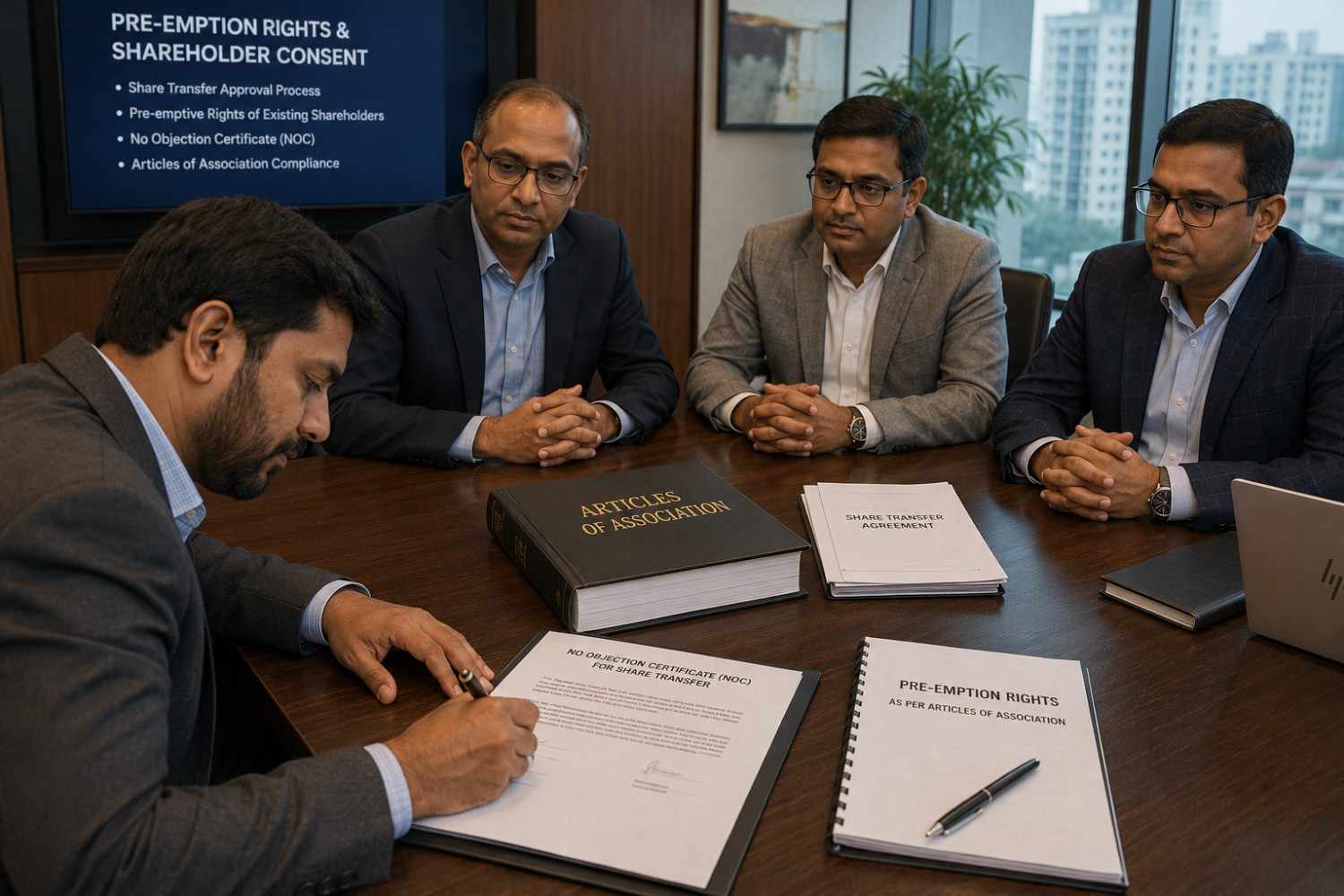
When dealing with a share transfer at rjsc in Bangladesh, being precise in this letter is crucial. It acts as the main proof of intent. It shows both parties agreed voluntarily and knew the conditions.
Ensuring Mutual Agreement on Terms
Ensuring both parties agree on these terms avoids future misunderstandings. It provides a clear record of both parties’ intentions. Clear communication at this stage is key to avoiding risks in a foreign share transaction.
This document is a vital piece of evidence in case of regulatory inquiries or internal disputes. By detailing every aspect, you safeguard your company from legal issues. You also ensure your records meet local standards.
Preparing the Share Transfer Deed and Form 117
Transferring company shares demands meticulous attention to detail. You must adhere strictly to the Companies Act of Bangladesh when preparing company shares transfer documents. This legal framework is crucial for the success of your transaction.
Whether dealing with a private limited company or a joint venture, accuracy is key. Mistakes in the paperwork can cause delays or even rejection. It’s vital to ensure all details about the parties involved are correct.
Drafting the Instrument of Transfer
The share transfer deed, or instrument of transfer, is the core agreement between buyer and seller. It must clearly outline the terms to prevent future disputes. Key elements to include in your draft are:
Full legal names and addresses of both the transferor and the transferee.
The exact number and class of shares being transferred.
The consideration amount or value agreed upon for the transaction.
The distinctive numbers of the share certificates involved.
Completing RJSC Form 117 Requirements
After finalizing the deed, focus on the official notification process. The company share transfer rjsc requirements are essential for legal recognition. This form notifies the Registrar of Joint Stock Companies of the ownership change.
Under the amended Companies Act, the transferor is generally required to appear in person at the RJSC office to sign Form 117 before the Registrar, along with supporting documents such as the audited financial statements and a list of directors.
Ensure Form 117 is signed by the company’s authorized signatories. Accurate data on this form keeps the public record transparent and compliant. Timely submission of this document is crucial for the legal transfer of shares in the corporate registry.
Calculating and Paying Applicable Stamp Duty
You must navigate the specific stamp duty regulations in Bangladesh to validate your share transfer deed. Properly managing these company shares transfer documents is essential. It ensures your transaction remains legally enforceable in a court of law.
Determining Stamp Duty Rates in Bangladesh
The stamp duty amount is typically calculated based on the total consideration value of the shares being transferred. Whether you are handling a private transfer or a joint venture transaction, the government mandates specific percentage rates. These rates must be strictly followed.
Currently, stamp duty is charged at 1.5% of the face value of the shares being transferred. This must be paid before Form 117 can be signed and accepted by the RJSC.
It is vital to verify the current rates with the relevant tax authorities or a legal professional before proceeding. Accurate calculation prevents future disputes. It ensures that your financial obligations are fully met during the transfer process.
Procedures for Stamping the Transfer Deed
Once you have determined the required amount, you must follow the official procedures to have the deed stamped. This process involves submitting the instrument to the designated government office. There, you receive the necessary official seal.
Completing this step is a prerequisite for any successful company share transfer rjsc filing. Failure to pay the correct stamp duty can render your transfer deed inadmissible in court. This can cause significant, costly delays in the registration process.
Executing the Share Transfer Deed
After preparing the necessary documents, the next step is to formally execute the share transfer deed. This is crucial to make the transaction legally binding and recognized by authorities. Following established share transfer rules Bangladesh helps prevent disputes or delays.
Witnessing and Notarization Requirements
The deed must be signed by both the transferor and transferee. To verify these signatures, the document should be signed in front of credible witnesses. These witnesses confirm the presence and consent of the parties involved.

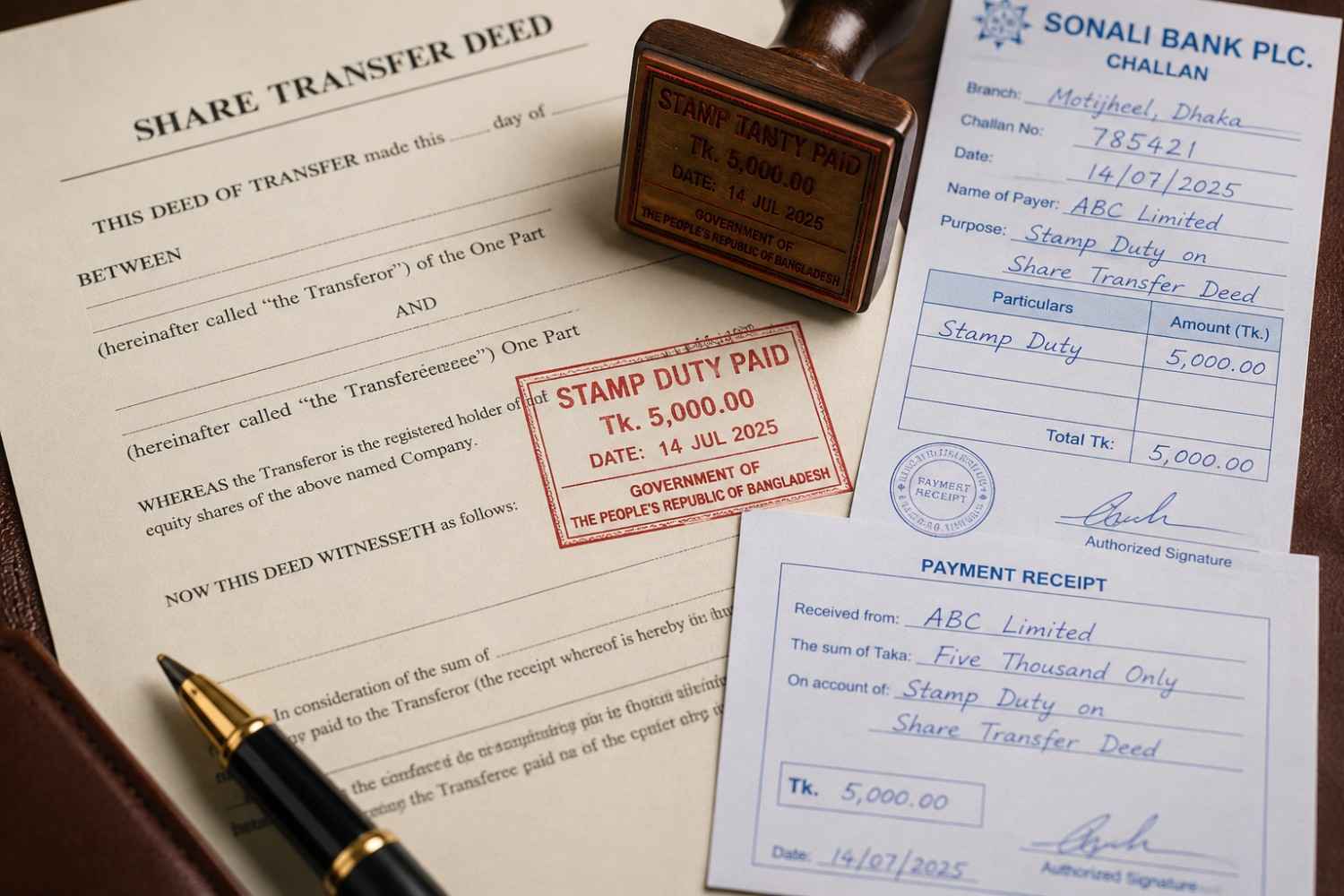
Notarization is often required. It adds a formal seal, validating the document’s integrity. Adhering to the rjsc share transfer procedure in Bangladesh ensures your paperwork meets official standards.
If the transferee is a foreign national or Non-Resident Bangladeshi (NRB), the transfer documents must be consularised — certified by the Bangladesh Embassy/High Commission and counter-verified by the Ministry of Foreign Affairs — before submission to RJSC.
Ensuring Proper Signatory Authority
It’s essential to verify the legal authority of those signing the deed. For corporate shares, confirm the signatory’s power to act on behalf of the company. This is especially crucial for joint venture transactions, where specific documents may be needed.
Always check the signatory’s legal capacity to bind the entity. Ignoring this can lead to application rejection. Confirming these details early safeguards the interests of all parties and ensures a smooth transfer.
Submitting Documentation to the Company Board
After signing the legal documents, you must present your transfer package to the board of directors for review. This step is crucial to ensure your actions comply with share transfer rules Bangladesh. A well-organized submission helps in a smooth ownership transfer.
Required Supporting Documents for Submission
To avoid delays, gather all necessary documents. The board needs specific evidence to validate the transaction. Prepare the following items for your submission:
The original share certificate currently held by the transferor.
The fully executed and stamped instrument of transfer.
Any additional evidence or declarations required by the company’s internal bylaws.
Proof of identity for both the transferor and the transferee.
Verifying the Completeness of the Application
Before submitting, thoroughly review your application package. A detailed check ensures you follow the rjsc share transfer procedure in Bangladesh correctly. A complete file allows the board to make a swift decision.
For joint venture cases, the scrutiny is even higher. A well-prepared application minimizes the chance of needing more information or delays.
Accuracy at this stage is your best tool for a successful transfer.
Convening the Board of Directors Meeting for Approval
A successful share transfer hinges on the board of directors’ approval. This meeting is crucial for ensuring the transaction meets the company’s governance and legal standards. It formalizes the approval, safeguarding the interests of both parties and upholding corporate transparency.
Notice Requirements for Board Meetings
Before the meeting, formal notice must be given to all directors. This notice must adhere to the timeframe outlined in your company’s Articles of Association. Strict adherence to these timelines is crucial to avoid legal disputes over the board’s decision.
The agenda should clearly state the review of the share transfer application. Adequate time for directors to review the documents ensures thorough joint stock share transfer procedure in Bangladesh.
Quorum and Procedural Standards
At the meeting, confirm a quorum is present to validate the proceedings. A meeting without the required number of directors is legally invalid. Accurate documentation of the discussion is essential to reflect the board’s consensus.
Adhering to these standards is critical for a company share transfer at rjsc in Bangladesh. A clear record of the meeting, including attendance and resolutions, simplifies regulatory filings and manages share transfer fees effectively.
| Requirement | Standard Practice | Compliance Goal |
|---|---|---|
| Meeting Notice | Written notice to all directors | Legal validity |
| Quorum | Minimum directors present | Procedural integrity |
| Documentation | Detailed meeting minutes | Audit readiness |
| Approval | Formal board resolution | Regulatory alignment |
Passing the Board Resolution for Share Transfer in Bangladesh
After the board reviews the transfer application, the next step is to formalize the decision with a board resolution. This confirms that the directors have evaluated the request and given their official consent. It’s important to consider various share transfer fees during this process. The resolution is the primary internal authorization for the change in ownership.
Drafting the Board Resolution
When drafting the resolution, precision is key to withstand legal scrutiny. The document must clearly state the names of the transferor and transferee, the number of shares involved, and the effective date of the transfer. Clarity in this document is crucial for a smooth joint stock share transfer procedure, eliminating any ambiguity about the board’s intent.
The resolution must explicitly state that the board has checked all eligibility requirements and compliance standards. Documenting these details protects the company from future disputes over the validity of the share movement. This formal statement is the basis for all subsequent administrative updates.
Recording the Approval in the Minute Book
After the board passes the resolution, it must be recorded in the company’s minute book. This book is the official, permanent record of all significant decisions made by the governing body. Not keeping accurate minutes can complicate any future ownership changes, as regulators often request these records during audits.
The minute book provides the necessary legal evidence that the transfer was authorized by the company’s leadership. Ensure that the chairperson or the company secretary signs the entry to validate the record. The following table outlines the essential components that must be included in your board resolution documentation.
| Component | Description | Legal Requirement |
|---|---|---|
| Resolution Number | Unique identifier for the meeting | Mandatory |
| Transfer Details | Names and share quantities | Mandatory |
| Board Consent | Formal approval statement | Mandatory |
| Signatory Details | Authorized director signatures | Mandatory |
Updating Statutory Records and the Register of Members
Maintaining accurate statutory records is a vital step after the board grants approval for a share transfer. Once the directors have formally authorized the movement of shares, you must immediately update your company books to reflect the change in ownership. This ensures that your organization remains fully compliant with the legal standards governing a joint stock company share transfer procedure in Bangladesh.


Entries in the Register of Members
The Register of Members serves as the definitive record of share ownership within your company. You are legally obligated to record the transfer details here, including the names and addresses of the new shareholders. This entry provides the necessary legal proof of ownership for the transferee.
Ensure that every detail matches the information provided in the share transfer form submitted during the application process. Any discrepancy in this register can lead to significant complications during future audits or regulatory inspections. Keeping this document current is essential for protecting the rights of your investors.
Updating the Share Transfer Register
Beyond the Register of Members, you must also maintain a dedicated Share Transfer Register. This document provides a chronological history of all share movements within your organization. It acts as a secondary layer of verification during regulatory audits.
By documenting every transfer in this register, you create a transparent audit trail for the company. This practice is highly recommended to ensure that your internal governance remains robust and organized. Use the following table to understand the primary differences between these two essential statutory records.
| Record Type | Primary Purpose | Frequency of Update | Legal Status |
|---|---|---|---|
| Register of Members | Identifies current owners | Upon every transfer | Mandatory / Statutory |
| Share Transfer Register | Tracks historical changes | After board approval | Best Practice / Internal |
| Minute Book | Records board decisions | Post-meeting | Mandatory / Statutory |
Canceling Old Certificates and Issuing New Share Certificates
After the board gives its approval, the next step is to formally cancel and issue new share certificates. This is the last administrative task in the process. It’s crucial to keep your records up to date to avoid any future disputes over ownership.
Surrendering the Original Share Certificate
The transferor must hand over the original share certificate to the company office. Before canceling, check the document against your records. It is essential to mark the certificate as “Canceled” to prevent misuse or confusion about ownership.
Recording this surrender properly helps keep the company in line with local corporate laws. After marking, store the certificate securely in your records.
Issuing the New Certificate to the Transferee
With the old certificate retired, issue a new one to the transferee. This new certificate proves their stake in the company. Make sure it’s signed by the right directors and sealed as per the company’s Articles of Association.
The share transfer form starts the process, but the new certificate seals the deal. Giving it to the new shareholder confirms their legal position in the company. Getting this right is vital for the integrity of your statutory records.
Final RJSC Filing and Compliance
After updating your internal records, the next step is to comply with the Registrar of Joint Stock Companies and Firms (RJSC). You must ensure the rjsc company share transfer Bangladesh process ends with the required filings. This step is crucial for legal transparency and protects your company’s reputation.
Filing Requirements with the Registrar of Joint Stock Companies
To finalize the process, submit the executed transfer instrument and the updated Form 117. It’s vital to confirm that the share transfer stamp duty has been fully paid. The RJSC will not accept filings without proof of stamping. Include a copy of the board resolution authorizing the transfer to complete your submission.
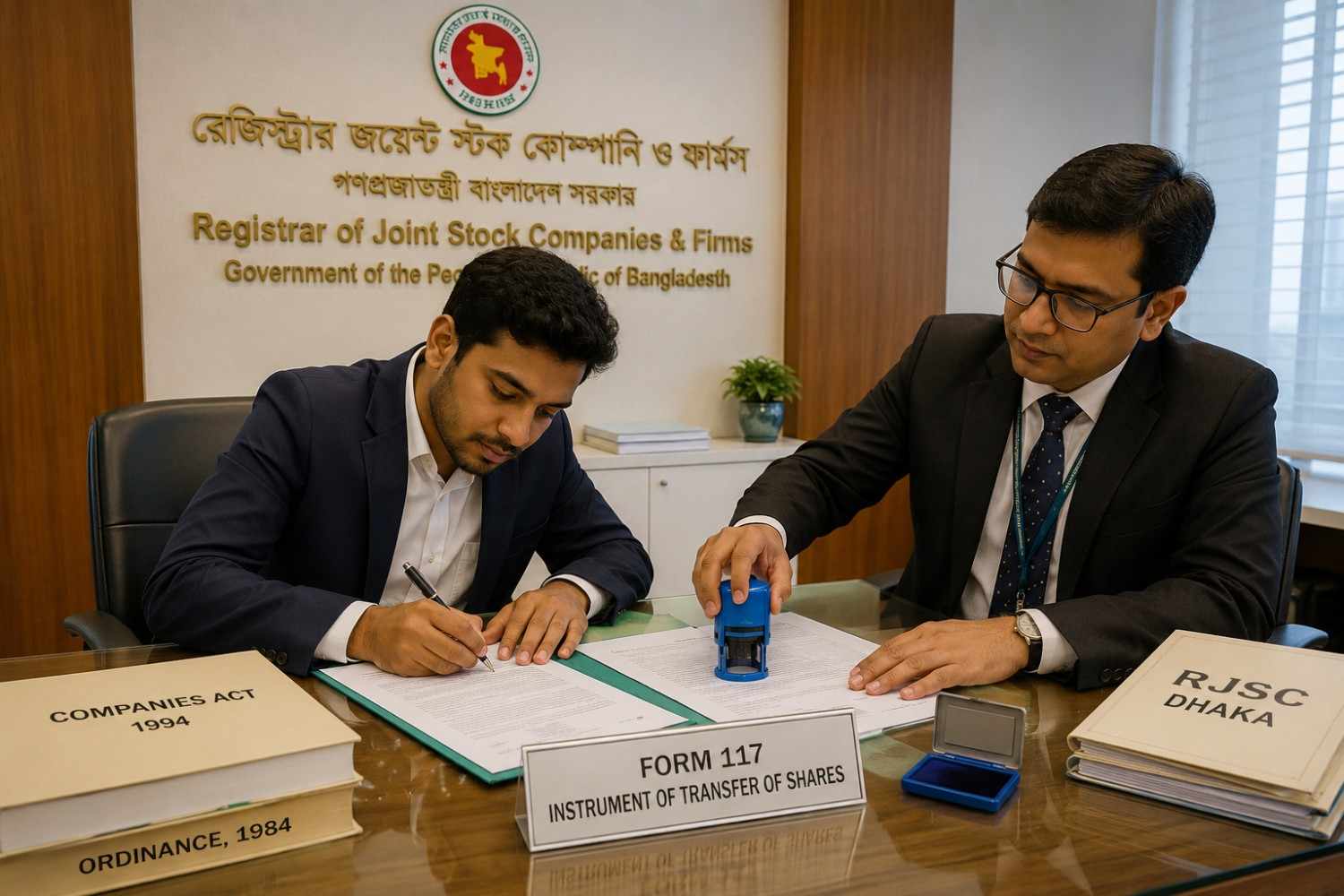

For foreign company share transfer in Bangladesh, you might need extra documents. These could include foreign exchange approvals or central bank compliance. Ensure all signatures on the forms match those in your company profile. Accurate information helps avoid delays in the review process.
Deadlines for RJSC Notifications
The Companies Act sets specific timelines for notifying authorities about shareholding changes. Filing these documents on time is crucial to avoid financial penalties and administrative issues. Missing these deadlines can cause problems during audits or when applying for certifications.
Staying proactive with these filings keeps your company in good standing. Below is a summary of the key compliance elements to track during the post-transfer phase.
| Requirement | Action Item | Importance |
|---|---|---|
| Form 117 | Submit to RJSC | High |
| Stamp Duty | Verify Payment | Critical |
| Board Resolution | Attach Copy | Mandatory |
| Statutory Deadline | Monitor Date | High |
Best Practices for Maintaining Share Transfer Records
Securing your corporate records is the final step in protecting your business interests. You should keep a dedicated archive of every transfer deed, board resolution, and consent letter for several years. This practice safeguards your company against future legal challenges while providing a clear history of ownership.
Always retain proof of your Share transfer stamp duty payments within your internal files. Accurate records allow you to demonstrate full compliance during any regulatory inspection. This level of diligence is vital for both local entities and those managing foreign investments.
A robust filing system simplifies the process for any future transaction. Consistent documentation acts as the hallmark of a well-managed organization. Reach out to legal experts if you require assistance with complex filings or specific regulatory requirements. Keeping your paperwork in order ensures long-term stability and operational success for your business.
How Long Does a Share Transfer Take?
While every case differs, most share transfers in Bangladesh follow a similar timeline: due diligence typically takes 2-4 weeks, board approval 1-2 weeks, payment and documentation about 1 week, RJSC filing and stamp duty processing 1-2 weeks, and final certificate issuance around 1 week — bringing the total process to roughly 6-9 weeks.
Disclaimer: This guide is for general informational purposes only and does not constitute legal advice. Consult a licensed lawyer or registration consultant for your specific case.
FAQ
What is the primary legal framework for a company share transfer in Bangladesh?
The share transfer process is governed by the Companies Act, 1994. To ensure a valid joint stock company share transfer procedure in Bangladesh, follow the regulations of the Registrar of Joint Stock Companies and Firms (RJSC). This includes adhering to your company’s Articles of Association and preparing all company shares transfer documents accurately.
How do I initiate the rjsc share transfer procedure in Bangladesh?
To start the share transfer procedure, review your Articles of Association for any pre-emptive rights. Then, prepare the share transfer form (Form 117), pay the share transfer stamp duty, and get board approval. Finally, file the documents with the Registrar for official recording.
What are the essential company shares transfer documents required for the RJSC?
For a successful company share transfer rjsc, submit the executed Share Transfer Deed (Form 117), original share certificates, and a board resolution. You also need a formal letter of consent from both parties. For foreign company share transfer rjsc, provide valuation evidence and inward remittance through banking Bangladesh.
How is the share transfer stamp duty calculated and paid?
The share transfer stamp duty is based on the total market value or consideration of the shares. Ensure the share transfer form is stamped according to the Bangladesh government’s rates. Not paying these share transfer fees can lead to rejection or legal issues.
What is the process for a foreign company share transfer in Bangladesh?
A foreign company share transfer in Bangladesh requires compliance with the Foreign Exchange Regulation Act. The share price must be fair, and the transaction must be reported to the Bangladesh Bank. This is crucial for joint venture company share transfer in Bangladesh involving international equity.
Can a board of directors refuse a joint stock share transfer in Bangladesh?
Yes, the board can refuse a joint stock share transfer in Bangladesh if the Articles of Association allow it or if the transfer violates share transfer rules Bangladesh. The refusal must be documented in a formal board meeting with justifiable reasons.
How do you handle a joint venture company share transfer at rjsc?
Executing a joint venture company share transfer at rjsc requires coordination between local and international partners. Ensure the documentation reflects the agreed valuation and complies with shareholder agreements. After approval, update your official records to complete the process.
What happens after the share transfer at rjsc in Bangladesh is approved?
After the share transfer at rjsc in Bangladesh is approved, update your company’s Register of Members and Share Transfer Register. Cancel the transferor’s old share certificate and issue a new one to the transferee. Maintaining these records is crucial for share transfer process compliance.
-
Foreign Company Registration in Bangladesh: Easy Guide 2026
Expanding your business into new markets offers exciting growth potential. Foreign Company Registration in Bangladesh is a straightforward process once you understand the local legal landscape. This guide provides a clear roadmap to help you navigate the legal requirements for setting up your operations effectively. We simplify the complex process of Foreign Company Incorporation Bangladesh…
-
Company Registration in Bangladesh: Easy Complete Guide
Embarking on a new venture is thrilling, yet it demands a strong base. A successful business setup in Bangladesh starts with picking the right legal form and completing the registration accurately. Quick Facts: Company Registration in Bangladesh Whether it’s a private limited company or a foreign-owned entity, the right documents are key to lasting success.…
-
Joint Venture Company Registration in Bangladesh: Complete Guide
Entering the South Asian market presents a significant opportunity for global investors. A strategic partnership allows you to merge resources and expertise. It also enables you to share operational risks effectively. Understanding Joint Venture Company Registration in Bangladesh is crucial for a smooth market entry. This guide simplifies the complex legal landscape and helps you…
-
Partnership Firm Registration in Bangladesh: Easy Steps (2026)
Starting a business with others is a wise choice for many entrepreneurs. It brings together shared resources and expertise, accelerating your venture’s growth. However, it’s crucial to handle the legal aspects correctly from the outset. Completing your partnership firm registration in Bangladesh grants your venture official status. This builds trust with clients and stakeholders. Grasping…
-
RJSC Annual Return Filing in Bangladesh: Easy 2026 Guide
Running a business demands strict adherence to local corporate laws. If you manage a company, prioritizing RJSC Annual Return Filing in Bangladesh is crucial to maintain your legal status. This ensures your entity remains transparent and trustworthy to stakeholders. Schedule X submission in Bangladesh is a vital part of your yearly obligations. Keeping your director…
-
Branch Office Registration in Bangladesh: Easy Guide
Bangladesh is one of South Asia’s fastest-growing economies — with strong GDP growth and a population exceeding 160 million, it offers substantial opportunity for foreign enterprises. Establishing a local office gives your company closer control over operations and faster access to customers and partners. This guide simplifies Branch Office Registration in Bangladesh: whether you’re evaluating…
-
Liaison Office Registration in Bangladesh
Expanding your business into new territories requires a clear strategy and a solid legal foundation. Bangladesh offers a wealth of untapped potential for international firms aiming to grow their global footprint. Establishing a local presence through liaison office registration in Bangladesh allows you to conduct vital market research and build lasting professional relationships. Navigating the…
-
Company Winding Up in Bangladesh: Complete Guide (2026)
Closing a business entity requires careful navigation of local legal frameworks. Whether you manage a local firm or a foreign enterprise, you must follow the Companies Act of 1994 to ensure a smooth exit. This formal procedure protects your interests while satisfying regulatory obligations. You might wonder how to wind up a company in Bangladesh…
-
One Person Company Registration in Bangladesh: Easy Guide
One Person Company Registration in Bangladesh gives solo entrepreneurs a solid legal foundation to safeguard their assets. This modern business model allows an individual to enjoy corporate perks while retaining full operational control, making it ideal for entrepreneurs aiming to grow without the hurdles of traditional partnerships. Registering your startup with the Registrar of Joint…
-
Foundation Registration in Bangladesh: Easy Guide (2026)
Setting up a non-profit in Bangladesh requires clear planning and a practical understanding of local rules. You’ll face specific administrative steps to ensure your organization operates legally and transparently. Understanding these requirements is the first step to creating lasting social impact. This guide lays out a clear, step-by-step path for Foundation Registration in Bangladesh, covering…