

Embarking on a new venture is thrilling, yet it demands a strong base. A successful business setup in Bangladesh starts with picking the right legal form and completing the registration accurately.
Quick Facts: Company Registration in Bangladesh
- Governing Law: Companies Act, 1994
- Registering Authority: RJSC (Registrar of Joint Stock Companies and Firms)
- Minimum Shareholders (Private Limited): 2 | Maximum: 50
- Minimum Directors (Private Limited): 2
- Minimum Shareholders (Public Limited): 7 | Minimum Directors: 3
- Name Clearance Fee: around Tk. 500-600 (paid online via RJSC portal)
- Name Clearance Validity: 30 days
- Time to Get Certificate of Incorporation: usually 3-7 working days after full document submission
- Stamp Duty on MoA/AoA: starts around Tk. 18,000 for authorized capital up to Tk. 10,00,000 (increases with higher capital)
- Foreign Ownership: 100% allowed in most sectors
Whether it’s a private limited company or a foreign-owned entity, the right documents are key to lasting success. The Registrar of Joint Stock Companies and Firms, or RJSC, is the main body overseeing this process. Understanding RJSC Bangladesh’s requirements is crucial for establishing credibility and unlocking growth opportunities.
Our team of experts makes your company registration in Bangladesh smooth. We guide you from name clearance to final incorporation, ensuring your business meets all.


Key Takeaways
- Select the appropriate legal structure for your specific business goals.
- Understand the vital role of the RJSC in the incorporation process.
- Ensure full compliance to build trust with stakeholders and partners.
- Complete tax and VAT registrations to avoid future legal hurdles.
- Leverage professional guidance to streamline your market entry.
Understanding the Role of RJSC in Business Incorporation
Your journey toward establishing a formal business entity in Bangladesh starts with the Registrar of Joint Stock Companies and Firms. As the primary regulatory authority, the RJSC oversees the lifecycle of all business organizations. This includes everything from initial formation to final dissolution. Proper engagement with this office is essential for maintaining legal standing in the local market.
What the RJSC Actually Does
Operating within the legal framework of RJSC Company Registration in Bangladesh requires a clear understanding of statutory requirements. You must ensure that your business structure aligns with the Companies Act to avoid future administrative hurdles. The registrar acts as the gatekeeper, ensuring that every entity follows the rules set by the government.
When you pursue joint stock company registration in Bangladesh, you are essentially entering a formal contract with the state. This process guarantees that your business is recognized as a separate legal entity. By adhering to these regulations, you protect your personal assets and build credibility with potential investors.
Essential Documentation for Initial Name Clearance
Before you can proceed with formal registration, you must secure company name clearance. This step is critical because it prevents the use of names that are already registered or misleading. You should prepare a list of potential names to increase your chances of approval during the first attempt.

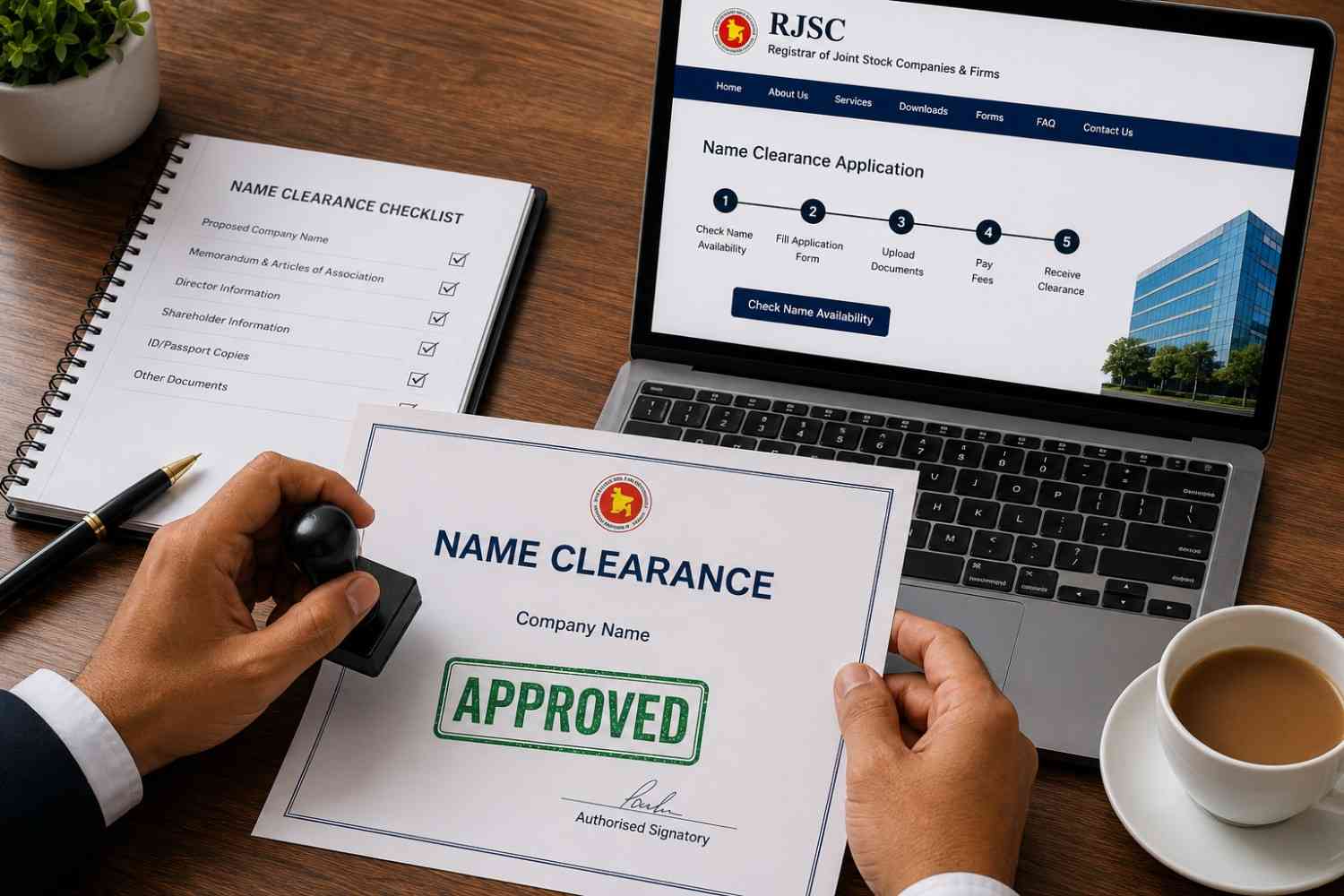
The following table outlines the key stages and requirements for your initial interaction with the authorities:
| Stage | Primary Objective | Key Requirement |
|---|---|---|
| Name Search | Verify uniqueness | Proposed business name |
| Name Clearance | Reserve the name | Clearance fee payment |
| Drafting Docs | Prepare legal papers | Memorandum of Association |
| Final Submission | Formal registration | RJSC approval certificate |
Securing your company name clearance is a foundational step in the joint stock company registration in Bangladesh. Once the name is approved, you gain the right to use it for your official documents and branding. Always ensure that your documentation is accurate to satisfy the RJSC and expedite your application process.
The RJSC name clearance fee is currently around Tk. 500-600, payable online, and once approved your name stays reserved for 30 days — giving you time to complete the remaining paperwork.
Procedures for Private and Public Limited Company Registration in Bangladesh
Choosing the right business structure is crucial for success in Bangladesh. Whether it’s a small startup or a large enterprise, knowing the company registration procedure in Bangladesh is essential. This ensures your business operates legally in the country.
Effective company incorporation in Bangladesh demands careful planning and adherence to the Companies Act. By picking the right entity type, you align your goals with regulatory needs. This foundation safeguards your interests and sets a path for growth.
Steps to Incorporate a Private Limited Company
Most entrepreneurs prefer private limited company registration in Bangladesh for its flexibility. First, you need to get name clearance from the Registrar of Joint Stock Companies and Firms (RJSC). After approval, draft the Memorandum and Articles of Association.
These documents outline your company’s goals and management rules. Next, pay stamp duties and registration fees. Then, submit your application and documents to the RJSC for your Certificate of Incorporation.
Once your documents are submitted correctly, RJSC typically issues the Certificate of Incorporation within 3-7 working days. Stamp duty on your Memorandum and Articles of Association starts at approximately Tk. 18,000 for companies with authorized capital up to Tk. 10,00,000, increasing for higher capital brackets.
Requirements for Public Limited Company Formation
For public capital rising, public limited company registration in Bangladesh is necessary. This path requires stricter compliance than private entities. You must have at least seven shareholders to start.
Additionally, a statutory meeting and a prospectus or statement is required. These steps ensure transparency for investors and creditors. Adhering strictly to these rules is key when learning how to register a limited company in Bangladesh.
| Feature | Private Limited Company | Public Limited Company |
|---|---|---|
| Minimum Shareholders | Two | Seven |
| Transfer of Shares | Restricted | Freely Transferable |
| Public Subscription | Not Allowed | Allowed |
| Minimum Directors | Two | Three |
Unlike private companies, public limited companies must also hold a statutory meeting and issue a prospectus before commencing business — a legal requirement under the Companies Act, 1994.
Knowing these differences helps you choose how to register limited company in Bangladesh wisely. Always seek legal advice to ensure your documents comply with all laws for directors and shareholders.
Establishing a One Person Company Registration with RJSC
If you’re a solo founder aiming to formalize your business, the RJSC offers a streamlined path for One person company registration in Bangladesh. This modern legal framework lets you enjoy corporate benefits while maintaining full control. It’s perfect for entrepreneurs aiming to scale their ventures without the hassle of traditional partnerships.
Eligibility Criteria for OPCs
To qualify, you must meet specific requirements set by regulatory authorities. Primarily, the entity must be formed by a single natural person who acts as the sole shareholder. It is essential to note that you must also appoint a nominee who will take over the business in the event of your death or incapacity.
- The founder must be a natural person, not another corporate entity.
- A nominee director must be appointed during the initial filing.
- The company must have a clear memorandum of association outlining its business activities.
Operational Advantages of One Person Companies
Choosing this path for your startup company registration provides significant protection for your personal assets. The business is a separate legal entity, limiting your liability to the capital invested. This separation is a crucial advantage for managing financial risks effectively.
Furthermore, the compliance burden is significantly lower compared to public limited companies. The administrative requirements are simplified, allowing you to focus more on growth and innovation. The following table highlights how this structure compares to other common business forms in Bangladesh.
| Feature | One Person Company (OPC) | Private Limited Company | Partnership |
|---|---|---|---|
| Minimum Members | 1 | 2 | 2 |
| Liability | Limited | Limited | Unlimited |
| Compliance Level | Low | Moderate | Low |
| Management | Sole Owner | Board of Directors | Partners |
By leveraging the RJSC framework, you ensure your startup company registration is handled with professional rigor. Completing your One person company registration in Bangladesh correctly sets a solid foundation for your future success. Always ensure your documentation is accurate to avoid delays in the approval process.
Foreign Company Registration and Market Entry
Expanding into Bangladesh demands a deep grasp of legal frameworks for foreign entities. You must overcome various regulatory obstacles to ensure your operations are fully compliant with local laws. A well-thought-out strategy is key to avoiding risks while capitalizing on growth opportunities in this burgeoning market.
Registering a Foreign Subsidiary in Bangladesh
The journey of foreign company registration in Bangladesh starts with securing name clearance from the Registrar of Joint Stock Companies and Firms. After confirming the name, you must draft the Memorandum and Articles of Association, customized for your business activities. These documents outline your operational scope and governance structure within the country.
Following incorporation with the Registrar, BIDA registration is imperative. It’s crucial for foreign investors to obtain work permits and ensure the repatriation of profits. Early completion of your foreign investment registration in Bangladesh ensures that your capital inflows are acknowledged by the central bank and relevant authorities.
For a company with roughly USD 100,000 in paid-up capital, government and RJSC fees typically run between USD 450-500. Foreign shareholders must also deposit their paid-up capital into a temporary bank account and obtain an Encashment Certificate before incorporation can be finalized.
Compliance Requirements for Foreign-Owned Entities
Compliance is an ongoing duty for foreign-owned entities. You must submit annual returns and audited financial statements to the Registrar to maintain your active status. Neglecting these deadlines can lead to severe penalties or the suspension of your business license.
Adherence to specific sector-based regulations is also crucial. BIDA registration in Bangladesh requires periodic updates on your investment and employment statistics. Keeping abreast of these requirements safeguards your foreign investment registration status and ensures long-term operational stability.
| Entity Type | Primary Purpose | Regulatory Focus |
|---|---|---|
| Foreign Subsidiary | Full Commercial Operations | RJSC & BIDA Compliance |
| Liaison Office | Market Research & Coordination | BIDA Approval Only |
| Branch Office | Specific Project Execution | RJSC & BIDA Oversight |
Setting Up a Joint Venture
Entering the local market through a strategic partnership requires a clear understanding of joint venture company registration in Bangladesh. This process allows foreign investors to combine resources with local entities. It leverages market knowledge and operational expertise. By forming a formal business entity, you ensure that your cross-border collaboration remains legally protected and scalable.


Structuring Agreements for Joint Ventures
A robust shareholder agreement serves as the foundation for your partnership. You must clearly define the roles, responsibilities, and equity distribution between the foreign and local partners. Precision in these documents prevents future disputes and clarifies the decision-making process for your board of directors.
Your agreement should also outline exit strategies and dividend distribution policies. By addressing these factors early, you create a stable environment for your joint venture company registration in Bangladesh. It is essential to ensure that all clauses align with the local Companies Act to maintain enforceability.
Regulatory Hurdles and Solutions
Navigating the regulatory landscape often presents challenges for international investors. You may encounter specific requirements regarding capital repatriation and local equity participation. Working with legal experts helps you address these hurdles while ensuring full compliance with the Registrar of Joint Stock Companies and Firms (RJSC).
The following table outlines key considerations for your venture structure:
| Feature | Foreign Partner Role | Local Partner Role |
|---|---|---|
| Capital Contribution | Foreign Currency Investment | Local Assets or Cash |
| Operational Oversight | Technical Expertise | Regulatory Liaison |
| Compliance Focus | BIDA Approval | RJSC Filings |
| Risk Management | Global Standards | Market Adaptation |
Proactive planning remains the best solution for overcoming administrative delays. By preparing your documentation according to RJSC guidelines, you streamline the joint venture company registration in Bangladesh. Consistent communication with regulatory bodies ensures that your business remains in good standing throughout its lifecycle.
Branch, Liaison, and Representative Offices
Deciding on the right legal structure for your foreign entity is crucial for entering the Bangladesh market. Foreign firms often seek to expand without the full incorporation complexities. By choosing the right office model, you ensure compliance with local laws and align with your business goals.
Distinguishing Between Office Types
It’s vital to understand the differences between these entities for compliance. Each serves as a market entry point but has distinct legal permissions and operational scopes.
| Office Type | Primary Function | Revenue Generation |
|---|---|---|
| Liaison Office | Communication and Market Research | Not Permitted |
| Branch Office | Commercial Activities | Permitted |
| Representative Office | Promotional Activities | Not Permitted |
A branch office registration in Bangladesh enables full commercial activities and revenue generation. In contrast, a liaison office focuses on communication between the parent company and local stakeholders. Careful selection of your office type affects your tax obligations and operational freedom.
Application Process for Foreign Liaison Office Registration in Bangladesh
The liaison office registration in Bangladesh process requires approval from the Bangladesh Investment Development Authority (BIDA). You must submit a detailed application outlining your business goals and financial support.
To secure your office status, follow these key steps:
Prepare a formal application letter signed by the authorized representative of the parent company.
Submit the Memorandum and Articles of Association of the parent firm, duly attested by the local embassy.
Provide a board resolution authorizing the opening of the office and appointing a local representative.
Include the audited financial statements of the parent company for the last two years.
After submitting your documents, BIDA reviews the proposal to ensure it aligns with national economic interests. Maintaining compliance during this period is crucial for a smooth approval process. Once approved, you must complete local trade licensing and tax registration to finalize your setup.
Partnership Firm Registration: Legal Framework
The Partnership firm registration in Bangladesh is a crucial step for entrepreneurs aiming to run a business together. This step is governed by the Partnership firm registration act. 1932,which sets the legal framework for your business. By registering your business, you ensure that the rights and liabilities of all partners are clearly defined and protected by law.
Applying the Partnership Act 1932
Understanding the legal framework is essential before starting. The Act details how partners should manage their internal and external obligations. Proper registration gives your firm the legal standing to sue or be sued in its name.
To proceed, you must learn how to register a partnership firm at RJSC. The Registrar of Joint Stock Companies and Firms (RJSC) is the primary authority for this process. Working with the RJSC partnership firm registration system ensures your business meets national standards.
Name Clearance and Deed Registration
The first step is obtaining Partnership firm name clearance. Your chosen name must be unique and not in conflict with existing entities. Securing this partnership firm name clearance is a necessary step before registering your deed.
After name approval, draft a comprehensive partnership deed. This document outlines profit sharing, capital contributions, and dispute resolution mechanisms. Submitting this deed to the RJSC completes the joint stock partnership firm registrationin Bangladesh process.
Following these steps correctly is the most reliable way to how to register a partnership firm registration at RJSC. Below is a summary of the key components involved in the registration process.
| Requirement | Description | Importance |
|---|---|---|
| Name Clearance | Verification of a Unique Business Name | Prevents Legal Conflicts |
| Partnership Deed | Legal Agreement Between Partners | Defines Rights and Duties |
| RJSC Filing | Official Submission of Documents | Grants Legal Recognition |
| Compliance | Adherence to the Companies Act, 1994 | Ensures Long-Term Stability |
Managing Company Share Allotment and Transfer
Issuing new shares or transferring existing ones requires adherence to the Registrar of Joint Stock Companies and Firms (RJSC) protocols. Keeping an accurate register of members is crucial for corporate transparency and stability. Following the legal path ensures your business remains compliant with regulatory authorities in Bangladesh.
Procedures for Share Allotment in Bangladesh
The company share allotment procedure in Bangladesh starts with a board resolution. You need to decide on the number of shares, their price, and the allottees’ identities. This step is vital for companies aiming to increase their capital base effectively.
After the board approves the allotment, filing the necessary returns with the RJSC is required. This update ensures your capital structure is reflected in the public record. Here are the key steps for a seamless process:
Pass a formal board resolution to authorize the new share issuance.
Prepare the return of allotment detailing the number and class of shares.
Pay the required government fees through the designated banking channels.
Submit the filing to the RJSC to finalize the company share allotment in Bangladesh.
Legal Requirements for Share Transfer at RJSC
Executing a Company share transfer at RJSC demands strict adherence to the Articles of Association and the Companies Act. Whether it’s a foreign company share transfer or a joint venture company share transfer RJSC, the documentation must be precise. Proper execution prevents legal disputes and ensures clear ownership records.
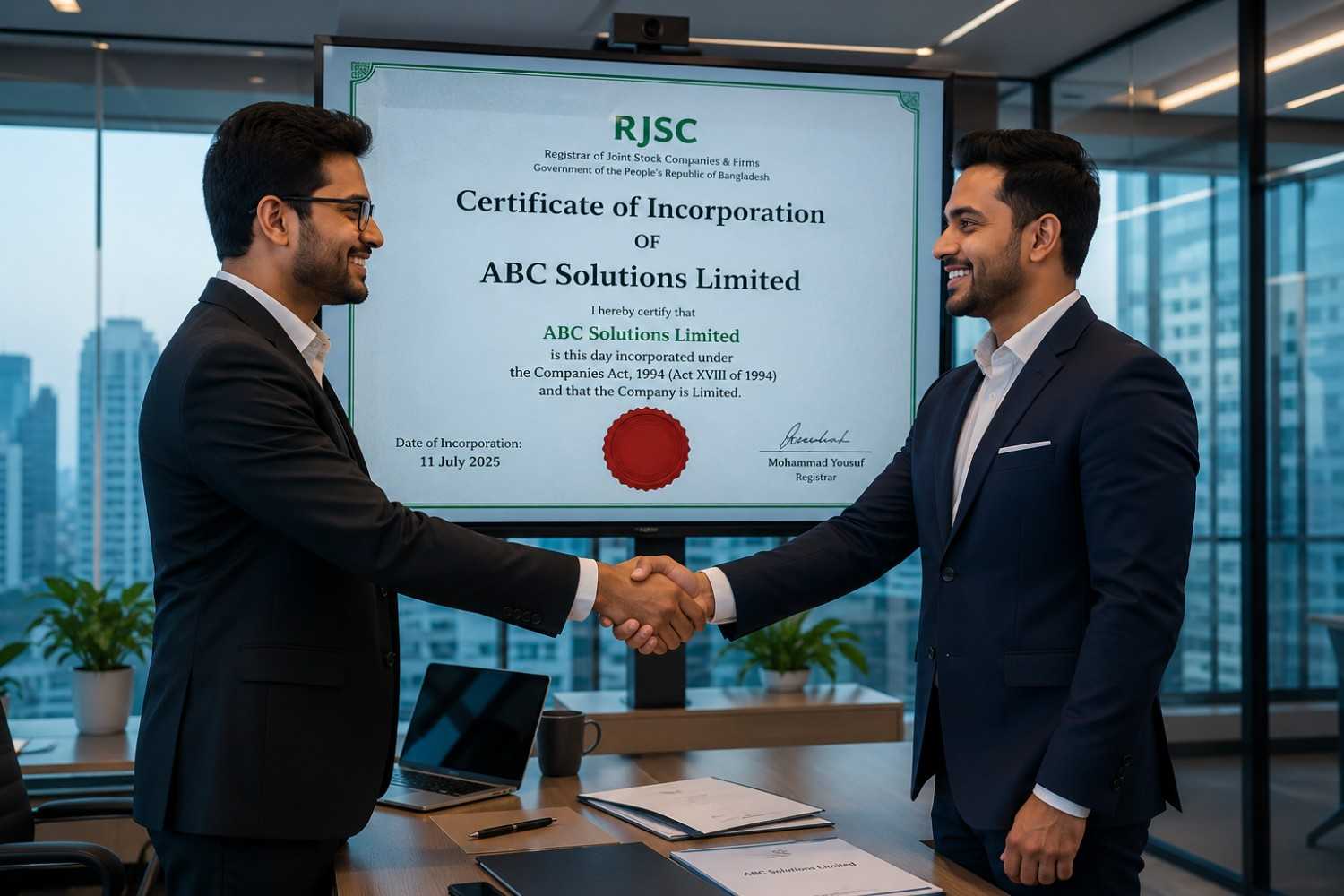

The share transfer procedure in Bangladesh involves several mandatory documents. These must be verified by the authorities. Below is a summary of the essential requirements for a successful transfer:
| Document Type | Purpose | Requirement |
|---|---|---|
| Instrument of Transfer | Legal Agreement Between Parties | Must Be Stamped |
| Share Certificate | Proof of Ownership | Original Must Be Surrendered |
| Board Resolution | Company Approval | Certified True Copy |
For a joint venture company share allotment in Bangladesh, ensure compliance with foreign investment regulations before filing. Accuracy in your filings is key to protecting your interests and maintaining a clean corporate history. Always consult with legal experts for complex cross-border transactions.
Compliance with Company Schedule X Submission in Bangladesh
The Company schedule X submission in Bangladesh is crucial for legal compliance in Bangladesh. It’s a key document that outlines your company’s financial and operational details. This ensures the Registrar of Joint Stock Companies and Firms (RJSC) has an up-to-date profile of your business.
By focusing on your RJSC schedule X submission in Bangladesh, you show transparency and integrity. This filing confirms your company operates within the legal bounds set by the government.
Importance of Schedule X in Annual Filings
Your annual compliance obligations are more than just paperwork. They are vital for maintaining your company’s good standing. The Company schedule x submission in Bangladesh gives authorities the data they need on your share capital, debt, and any structural changes. Without it, your company might struggle during audits or when seeking funding.
Keeping your records up to date through the RJSC return submission in Bangladesh process helps avoid legal issues. It ensures stakeholders and regulatory bodies have verified information about your company’s health.
Deadlines and Penalties for Non-Compliance
Meeting filing deadlines is essential for business owners. Missing these deadlines can lead to severe financial and operational consequences. Here are some risks of missing your filing dates:
Late filing fees: The RJSC charges daily penalties for delays beyond the deadline.
Legal notices: Repeated non-compliance may result in formal notices from the registrar.
Operational restrictions: Your company might face restrictions when updating trade licenses or securing loans.
Reputational damage: A history of poor compliance can harm your reputation with investors and partners.
It’s important to track your filing deadlines to protect your business. Being organized allows you to focus on growth while keeping a clean record with authorities.
RJSC Annual Return Submission in Bangladesh and General Meeting Filings
Understanding RJSC filing requirements is the first step to managing your corporate duties effectively. Keeping accurate records is crucial for the long-term health and reputation of your company in Bangladesh. Adhering to these legal procedures ensures transparency with shareholders and government bodies.
Preparing for the Annual General Meeting
The Annual General Meeting (AGM) is a cornerstone of corporate governance. It must be held within the time frame set by the Companies Act to review financials and appoint directors. Proper preparation includes creating detailed agendas and sending out notices to shareholders well in advance.
During the meeting, it’s important to document all resolutions and discussions accurately. This documentation is a must for your annual general meeting filing. Having signed and secure minutes will safeguard your company during audits or regulatory checks.
Filing Annual Returns with the Registrar
After the meeting, the next step is the formal RJSC return submission in Bangladesh. This confirms your company’s active status and compliance with regulations. You need to gather all financial statements and director reports for your RJSC annual return filing in Bangladesh promptly.
On-time submission prevents penalties and keeps your company in good standing. While handling your company annual tax return submission, ensure all data matches the AGM information. Consistency in these documents is essential for regulatory approval.
| Requirement | Deadline | Key Document |
|---|---|---|
| Annual General Meeting (AGM) | Within 18 Months of Incorporation | Minutes of Meeting |
| Annual Return Filing | Within 30 Days of AGM | Form 23B |
| Tax Return Submission | As per NBR Schedule | IT-11GA |
By linking your annual general meeting filing with your RJSC return submission in Bangladesh, you simplify your administrative tasks. Always check that your company annual tax return submission shows your business’s current financial status. Meeting these deadlines shows your dedication to professional corporate management.
Registration for Societies, Foundations, and Trusts
Planning a charitable or social impact initiative? Your first step is to navigate the registration landscape. Creating a formal entity is crucial for legal recognition and public trust in Bangladesh. Whether you aim to form a society or a trust, the process gives you the structure to operate effectively.
Legal Framework for Non-Profit Organizations
Non-profit entities in Bangladesh operate under specific laws. For example, Society Registration in Bangladesh is mainly governed by the Societies Registration Act of 1860. This act enables groups to come together for literary, scientific, or charitable goals.
Trusts, however, are covered by the Trust Act of 1882. This act is designed to manage property or assets for the benefit of others. Knowing these laws is essential for compliance and protects your organization under national law.
Registration Processes for Societies and Trusts
The process to formalize varies by entity type. For Foundation Registration at RJSC in Bangladesh, you need a detailed memorandum of association and bylaws. These documents outline your goals and ensure accountability.
For trust registration in Bangladesh, a formal trust deed is required. This deed must be registered with the relevant sub-registrar office to be legally binding. After finalizing the deed, you can file the necessary documents to empower your organization for social activities.
Compliance requires careful record-keeping and adherence to reporting standards. By following these procedures, your organization can focus on social impact goals without legal risks. Proper registration is key to a sustainable and transparent non-profit operation.
Trade Organization Registration and Licensing
Trade organization registration in Bangladesh is crucial for industry advocacy and growth. It gives your association legal authority to speak for your sector. This ensures your organization operates transparently and accountably in the Bangladeshi market.
Requirements for Chambers and Trade Bodies
To start your trade organization registration, define your entity’s scope and membership criteria. Chambers and industry associations fall under the Ministry of Commerce’s regulations. You must prepare detailed documents to prove your organization’s legitimacy and purpose.
The necessary items for your application include:
A formal application to the Director of Trade Organizations.
A certified Memorandum and Articles of Association copy.
A list of founding members and their business credentials.
Proof of office space and a valid trade license.
A detailed plan of your trade body’s objectives and activities.
Maintaining Compliance for Trade Organizations
After registering your trade organization, focus on long-term compliance. Hold annual general meetings to discuss industry challenges and governance. Accurate meeting records are crucial for annual reports.
Compliance is more than paperwork; it involves regulatory engagement. Key actions to maintain compliance include:
Submit annual audit reports on time.
Keep an updated member register and their contributions.
Notify the government of any board or bylaw changes.
Follow the legal framework for non-profit bodies.
Meeting these obligations keeps your organization a powerful and legitimate voice for your industry. Proactive management of your licensing status avoids penalties and ensures your advocacy efforts continue without interruption.
Company Winding Up and Liquidation Procedures
As your business journey comes to an end, it’s crucial to navigate the formal exit strategy for regulatory compliance. Executing a company winding up in Bangladesh demands a structured approach. This ensures all legal obligations are met before the entity ceases to exist. It protects directors from future liabilities and ensures a clean break from corporate responsibilities.
Proper documentation is key during this transition. Whether closing due to strategy changes or market conditions, following the Registrar of Joint Stock Companies and Firms (RJSC) guidelines is essential. Understanding the specifics of company winding up RJSC protocols helps avoid legal risks during dissolution.
Voluntary Winding Up of a Company
A voluntary exit allows shareholders to initiate closure when the business is solvent. First, a special resolution at a general meeting is needed to wind up the company. Then, a liquidator is appointed to oversee asset distribution and debt settlement.
After settling all affairs, the liquidator prepares a final account of winding up. This report is presented to members to confirm all obligations are cleared. Finally, necessary documents are filed with the RJSC for a formal company strike off from the register.
Court-Ordered Liquidation Processes
In some cases, the court may intervene to oversee dissolution. This happens when a company can’t pay its debts or when the judiciary deems it just and equitable.
Company liquidation in Bangladesh under court supervision protects creditors and stakeholders through a transparent legal process.
The court appoints an official liquidator to manage assets and claims. This professional evaluates liabilities and ensures assets are liquidated properly. Once the court is satisfied, it issues an order for final dissolution, effectively ending the company’s legal existence.
Partnership Firm Winding Up and Dissolution
When it’s time to dissolve your partnership, following the correct legal steps is crucial for a smooth exit. Closing a business is more than just stopping operations. It
involves a formal process to protect partners from future liability. By following the legal framework in Bangladesh, you ensure your business closure is recognized and respected.
Legal Steps to Dissolve a Partnership
The dissolution of a partnership is primarily governed by the Partnership Act of 1932. First, determine if the dissolution is voluntary or if it’s triggered by specific events like a partner’s death or insolvency. A court may also order dissolution if disputes are unmanageable.
To start the process, follow these critical steps:
Review the Partnership Deed: Check your original agreement for specific clauses regarding dissolution and asset distribution.
Draft a Dissolution Agreement: All partners should sign a formal document stating the intent to close the firm.
Public Notice: It is standard practice to publish a notice in a local newspaper to inform creditors and the public of the firm’s closure.
Settling Liabilities and Final Filings
Once the decision to close is finalized, your focus shifts to clearing all outstanding financial obligations. You must pay off all firm debts, settle tax liabilities, and distribute remaining assets among partners. Transparency during this phase is vital to prevent long-term legal disputes.
After settling your debts, notify the Registrar of Joint Stock Companies and Firms (RJSC) to update their records. Failure to complete these final filings can lead to ongoing compliance issues. Ensure you submit the necessary forms to officially remove your firm from the active register, providing a clean and legally sound conclusion to your business venture.
Essential Post-Registration Compliance and Licensing
Getting your business registered is just the start in Bangladesh. To keep your company running smoothly and legally, you need to tackle several post-incorporation tasks. These steps are crucial to prove your business’s legitimacy and let you operate freely.
Obtaining Trade Licenses and TIN/BIN
The first step is to get a trade license registration from your local city corporation or municipality. This license is your key to doing business in your area. At the same time, you must register for a TIN to handle corporate tax filings.
Also, you need to register for VAT Registration in Bangladesh to get a Business Identification Number (BIN). Keeping this status is essential, as you must regularly submit VAT returns to the tax authorities. For foreign investors, managing tasks like an E-visa extension Bangladesh is vital to maintain your legal status.
Securing IRC and ERC for Import-Export
If your business deals with international trade, securing an import registration in Bangladesh is crucial. This involves getting an IRC registration in Bangladesh to legally import goods. You also need an Export Registration Certificate in Bangladesh to export products globally.


These licenses are overseen by the Office of the Chief Controller of Imports and Exports. Having accurate documentation prevents customs delays and keeps your supply chain efficient. Here’s a quick overview of the key documents needed for your business.
| Requirement | Deadline | Key Document |
|---|---|---|
| Annual General Meeting (AGM) | Within 18 Months of Incorporation | Minutes of Meeting |
| Annual Return Filing | Within 30 Days of AGM | Form 23B |
| Tax Return Submission | As per NBR Schedule | IT-11GA |
Strategic Considerations for Long-Term Corporate Compliance
Establishing a sustainable business in Bangladesh goes beyond the initial registration. It demands ongoing operational integrity to safeguard assets and reputation. Engaging professional company compliance services is crucial for navigating the intricate regulatory landscape confidently.
Managing tax obligations is a vital aspect of your business journey. Regular tax return filing in Bangladesh helps avoid penalties and legal issues. Establish a dependable system for annual income tax submissions to keep good standing with the National Board of Revenue.
Expert corporate legal services in Bangladesh offer the necessary guidance for adapting to changing government policies. These professionals help ensure your entity remains strong against audits and regulatory shifts. Proactive legal management is key to securing your business’s future success in this competitive market.
Your dedication to transparency and timely filings fosters trust among stakeholders and partners. Consult with qualified legal experts to review your current status and pinpoint areas for enhancement. Protecting your company today lays the groundwork for its growth tomorrow.
Disclaimer: This guide is for general informational purposes only and does not constitute legal advice. Consult a licensed lawyer or registration consultant for your specific case.
FAQ
How do I initiate company registration in Bangladesh for my new business?
To start your company registration in Bangladesh, first, you need to talk to the Registrar of Joint Stock Companies and Firms (RJSC). Begin by applying for a company name clearance to ensure your name is unique. After clearance, you can formally register your company by submitting the Memorandum and Articles of Association. You also need to provide details about your directors to ensure legal compliance.
What is the primary role of the RJSC in joint stock company registration?
The RJSC is the key regulatory body for joint stock company registration in Bangladesh. They oversee the entire business lifecycle, from initial registration to strike off if needed. To navigate this process, you must get a company name clearance and provide necessary documents that meet the Registrar’s requirements for transparency and legality.
What is the standard company registration procedure in Bangladesh for private and public limited entities?
he registration process for private and public limited companies differs. Private companies need at least two shareholders and directors, while public companies require seven shareholders and three directors. Both types involve drafting a Memorandum and Articles of Association and obtaining certificates from the RJSC to finalize your registration.
Who is eligible for one person company registration rjsc and what are its benefits?
One person company registration is for solo entrepreneurs who want limited liability. To qualify, you must be a natural person. This setup is great for startups, offering advantages like simplified compliance and full control over business decisions while maintaining a separate legal identity.
How can international investors complete foreign company registration in Bangladesh?
Foreign investors must take extra steps for registration, including obtaining BIDA registration from the Bangladesh Investment Development Authority. They need to navigate foreign investment protocols and meet all RJSC filing requirements. Foreign directors might also need to extend their e-visa to maintain their status in the country.
What are the requirements for joint venture company registration in Bangladesh?
For joint venture registration, you must draft a detailed shareholder agreement between local and foreign partners. This ensures clear legal terms for share allotment and transfer. Navigating these regulations requires precise documentation to meet RJSC guidelines.
How do I choose between branch office registration and liaison office registration?
Choose branch office registration for commercial activities. For communication or market research, a liaison office is better. Both require BIDA and RJSC approvals to operate legally without full incorporation.
How to register a partnership firm at rjsc under the Partnership Act 1932?
To register a partnership firm at RJSC, follow the Partnership Act 1932. First, get name clearance, then draft and notarize a partnership deed. Finally, register with RJSC to gain legal recognition.
What is the company share allotment procedure in Bangladesh for existing firms?
For share allotment, issue new shares and file forms with RJSC. For transfers, execute a deed and record it accurately at RJSC. International entities may need tax clearances and updates.
Why is company schedule x submission mandatory for my business?
Company schedule x submission lists shareholders and their holdings. Timely submission avoids penalties and keeps your company in good standing. It provides an updated record of ownership and capital structure to the government.
What documents are required for rjsc annual return filing and annual general meeting filing?
For annual return filing, submit audited financial statements and AGM minutes. Annual general meeting filing must be done within the statutory timeframe. Proper submission ensures transparency and confirms operational compliance with RJSC.
How do I complete foundation registration rjsc or trust registration?
Non-profit entities need specific steps for registration. Foundation and society registration require RJSC clearance under the Societies Registration Act. Trust registration involves executing a trust deed. These steps empower your organization legally to receive funds and execute its mission.
What is involved in trade organization registration for industry bodies?
Trade organization registration is for chambers of commerce or industry associations. These bodies must follow Ministry of Commerce and RJSC guidelines. Compliance involves regular updates and adherence to approved bylaws.
How does company winding up in Bangladesh differ from company strike off?
Company winding up settles liabilities and distributes assets, either voluntarily or by court order. Strike off is simpler for defunct companies to be removed from RJSC. Both require thorough documentation to ensure legal obligations are met.
What are the steps for partnership firm winding up and dissolution?
Partnership firm winding up requires partners to agree on dissolution and settle debts. Notify RJSC to update the firm’s status. This ensures liabilities are finalized and the partnership is officially canceled under the Partnership Act 1932.
Which licenses are required after successful company incorporation in Bangladesh?
After registration, you need trade, TIN, and BIN licenses. Global traders require IRC and ERC registrations. Most businesses need VAT registration, followed by regular VAT returns to comply with the National Board of Revenue.
Why should my business prioritize annual tax return filing and corporate legal services?
Annual tax return filing and corporate legal services protect your business from legal disputes and audits. Using a VAT consultant and corporate legal services ensures compliance with tax returns and company laws. This secures your long-term success in the market.
Related Guides
-
Foreign Company Registration in Bangladesh: Easy Guide 2026
Expanding your business into new markets offers exciting growth potential. Foreign Company Registration in Bangladesh is a straightforward process once you understand the local legal landscape. This guide provides a clear roadmap to help you navigate the legal requirements for setting up your operations effectively. We simplify the complex process of Foreign Company Incorporation Bangladesh…
-
Joint Venture Company Registration in Bangladesh: Complete Guide
Entering the South Asian market presents a significant opportunity for global investors. A strategic partnership allows you to merge resources and expertise. It also enables you to share operational risks effectively. Understanding Joint Venture Company Registration in Bangladesh is crucial for a smooth market entry. This guide simplifies the complex legal landscape and helps you…
-
Partnership Firm Registration in Bangladesh: Easy Steps (2026)
Starting a business with others is a wise choice for many entrepreneurs. It brings together shared resources and expertise, accelerating your venture’s growth. However, it’s crucial to handle the legal aspects correctly from the outset. Completing your partnership firm registration in Bangladesh grants your venture official status. This builds trust with clients and stakeholders. Grasping…
-
Company Share Transfer in Bangladesh: Easy RJSC Guide (2026)
Understanding the legal intricacies of corporate ownership changes is crucial. Whether it’s for restructuring or succession, knowing the mandatory steps is essential. This knowledge ensures your actions are in line with local laws. Quick Facts: Company Share Transfer in Bangladesh Every step must comply with the Companies Act and the Registrar of Joint Stock Companies…
-
RJSC Annual Return Filing in Bangladesh: Easy 2026 Guide
Running a business demands strict adherence to local corporate laws. If you manage a company, prioritizing RJSC Annual Return Filing in Bangladesh is crucial to maintain your legal status. This ensures your entity remains transparent and trustworthy to stakeholders. Schedule X submission in Bangladesh is a vital part of your yearly obligations. Keeping your director…
-
Branch Office Registration in Bangladesh: Easy Legal Guide
Bangladesh is one of South Asia’s fastest-growing economies — with strong GDP growth and a population exceeding 160 million, it offers substantial opportunity for foreign enterprises. Establishing a local office gives your company closer control over operations and faster access to customers and partners. This guide simplifies Branch Office Registration in Bangladesh: whether you’re evaluating…
-
Liaison Office Registration in Bangladesh
Expanding your business into new territories requires a clear strategy and a solid legal foundation. Bangladesh offers a wealth of untapped potential for international firms aiming to grow their global footprint. Establishing a local presence through liaison office registration in Bangladesh allows you to conduct vital market research and build lasting professional relationships. Navigating the…
-
Company Winding Up in Bangladesh: Complete Legal Guide (2026)
Closing a business entity requires careful navigation of local legal frameworks. Whether you manage a local firm or a foreign enterprise, you must follow the Companies Act of 1994 to ensure a smooth exit. This formal procedure protects your interests while satisfying regulatory obligations. You might wonder how to wind up a company in Bangladesh…
-
One Person Company Registration in Bangladesh: Easy Guide
One Person Company Registration in Bangladesh gives solo entrepreneurs a solid legal foundation to safeguard their assets. This modern business model allows an individual to enjoy corporate perks while retaining full operational control, making it ideal for entrepreneurs aiming to grow without the hurdles of traditional partnerships. Registering your startup with the Registrar of Joint…
-
Foundation Registration in Bangladesh: Easy Guide (2026)
Setting up a non-profit in Bangladesh requires clear planning and a practical understanding of local rules. You’ll face specific administrative steps to ensure your organization operates legally and transparently. Understanding these requirements is the first step to creating lasting social impact. This guide lays out a clear, step-by-step path for Foundation Registration in Bangladesh, covering…