Closing a business entity requires careful navigation of local legal frameworks. Whether you manage a local firm or a foreign enterprise, you must follow the Companies Act of 1994 to ensure a smooth exit. This formal procedure protects your interests while satisfying regulatory obligations.

You might wonder how to wind up a company in Bangladesh effectively. The process involves settling outstanding debts, liquidating assets, and clearing tax liabilities.
Key Takeaways
- Understand the legal framework under the Companies Act of 1994.
- Identify the specific requirements for foreign and joint venture entities.
- Learn the importance of settling financial debts and tax obligations before closure.
- Follow the mandatory RJSC filing procedures to ensure compliance.
- Ensure a clean exit to avoid future legal or financial liabilities.
Understanding the Legal Framework for Company Winding Up in Bangladesh
Considering closing your business? First, grasp the legal framework for the winding up procedure in Bangladesh. The Companies Act, 1994, is the key legislation. Following these laws is crucial for a compliant company winding up process in Bangladesh.
Types of Companies Subject to Winding Up
The dissolution process varies by company type. For a private limited company winding up in Bangladesh, specific shareholder resolutions and audits are required. On the other hand, a public limited company winding up in Bangladesh demands more public disclosures and regulatory checks due to its wider shareholder base.
Identifying your company type correctly is the first step to avoid legal issues. Whether it’s a small family business or a large corporation, the law requires strict adherence to the filing protocols set by the Registrar of Joint Stock Companies and Firms (RJSC).
Distinguishing Between Voluntary and Compulsory Liquidation
Understanding the difference between voluntary and compulsory liquidation is essential. A voluntary winding up process is started by shareholders when the company’s purpose is fulfilled or it’s no longer viable. This method allows for a controlled and orderly asset distribution.
Compulsory liquidation, however, is ordered by the High Court Division. It’s usually due to insolvency or failure to meet statutory obligations. Following the correct Company winding up procedure in Bangladesh is crucial to safeguard your interests and ensure a smooth market exit.
Preparing the Required Legal and Financial Documents
Preparing the necessary legal and financial documents is the cornerstone of your exit strategy. Before you can formally close your business, your paperwork must pass strict regulatory checks. Adhering to these company dissolution steps ensures you meet all Company winding up requirements in Bangladesh efficiently.
Drafting the Board Resolution for Dissolution
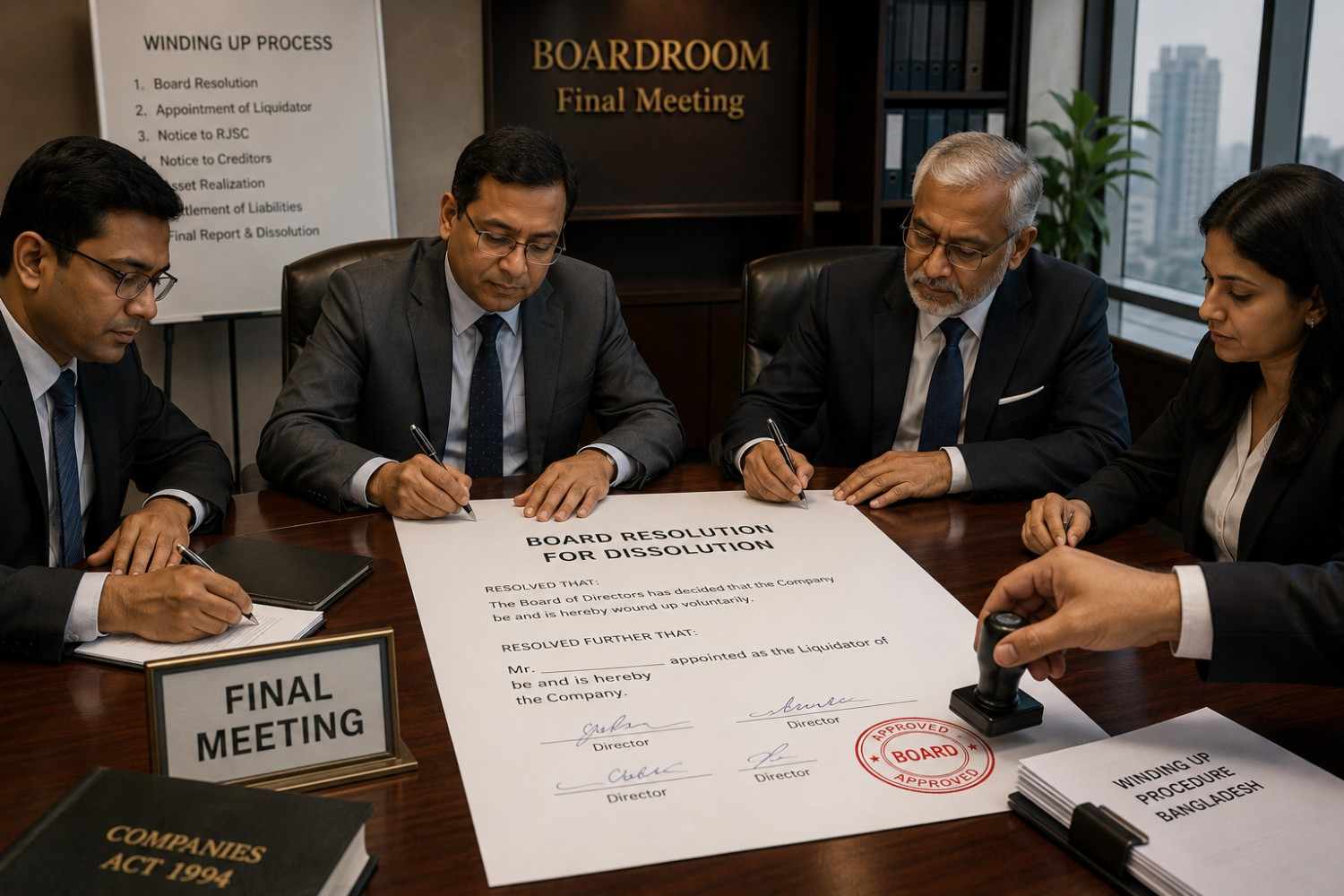
The foundation of your legal exit is a formal board resolution. This document is the official record that the directors have agreed to cease business operations. It must clearly state the intent to wind up the company and the appointment of a liquidator.
After drafting, the resolution needs to be signed by the authorized directors. It serves as the primary evidence for the Registrar of Joint Stock Companies and Firms (RJSC) that the decision was made unanimously or by majority vote. Keeping a certified copy of this resolution is crucial for all subsequent filings.
Compiling Statutory Records and Shareholder Registers
Gathering all internal records is essential to provide a clear picture of the company’s history. This includes minute books, share transfer registers, and lists of current shareholders. Having this Company winding up documents in Bangladesh organized will demonstrate transparency to the authorities.
If your records are incomplete, you may face significant hurdles during the audit phase. Ensure that your register of members is up to date and reflects the current shareholding structure. The following table outlines the essential items you need to prepare for a smooth transition.
| Document Category | Specific Item | Purpose of Filing |
|---|---|---|
| Corporate Records | Board Resolution | Official authorization of closure |
| Statutory Registers | Shareholder Register | Verification of ownership |
| Financial Data | Audited Balance Sheet | Assessment of assets and debts |
| Legal Filings | Required documents for company winding up | Compliance with RJSC standards |
Appointing a Liquidator for Your Business
Deciding to wind up your firm marks the beginning of a crucial legal phase. The formal Appointing a Liquidator is your next step. This person takes full control over your company’s affairs. They ensure that the company liquidation in Bangladesh meets all legal standards. By entrusting them with this role, you safeguard your business interests and uphold legal standards during the transition.
Criteria for Selecting a Qualified Liquidator
When starting the liquidator appointment process, focus on candidates well-versed in local corporate laws. A qualified professional should have a background in accounting or law. This expertise is crucial for handling your financial records’ complexities. Experience is vital, as they will navigate Bangladesh’s regulatory landscape.
It’s also essential to ensure the liquidator’s independence. An impartial liquidator ensures fairness in asset distribution. Always review their past performance in similar cases to confirm their capability to manage your situation effectively.
Defining the Liquidator’s Powers and Responsibilities
The liquidator’s primary role is to oversee the company liquidation process in Bangladesh transparently. They have the authority to take control of all assets, verify debts, and manage creditor communications. This power enables them to settle financial obligations legally and orderly.
Moreover, appointing a liquidator in Bangladesh means, entrusting them with preparing final reports for the RJSC. They must document all transactions and ensure compliance with the Companies Act. Their work bridges your active business operations to the entity’s final dissolution.
Filing the Winding-Up Application at RJSC
Filing the Winding-Up Application at RJSC marks the first step in formally notifying the Registrar of your intent to dissolve your business. This action initiates the legal oversight needed to safeguard the interests of all stakeholders. By making this request, you initiate a structured exit from the Bangladeshi market.
Navigating the RJSC Online Portal
The Registrar of Joint Stock Companies and Firms (RJSC) offers a digital platform to simplify the RJSC winding up process. It’s crucial to ensure your user credentials are active and your company profile is up-to-date on the portal. Accessing the right module for dissolution is essential to avoid technical issues with your company winding up application.
Once logged in, specific fields are dedicated to the winding up application to RJSC. It’s vital to upload all supporting documents in the correct file formats to prevent system rejections. Always double-check that the data entered aligns with your internal corporate records before submitting.
Submission Protocols and Requirements
Strict submission protocols are necessary for a successful RJSC company liquidation in Bangladesh. Ensure that every document, from board resolutions to financial statements, is accurate. Adhering to the correct filing procedures at RJSC helps avoid administrative delays that could extend the closure timeline.
The following table outlines the key stages and requirements for your submission:
| Submission Stage | Primary Requirement | Expected Outcome |
|---|---|---|
| Portal Access | Valid User ID & Password | System Entry |
| Data Entry | Company Registration Details | Draft Application Saved |
| Document Upload | Certified Board Resolution | Verification Pending |
| Final Submission | Digital Signature / Payment | Application Acknowledgment |
Meticulous record-keeping during this phase ensures your application meets all regulatory standards. Proper preparation at this stage is crucial for a smooth transition towards full corporate dissolution.
Submitting Required Documents of Company Winding Up to RJSC
After submitting your initial application, the next step is to submit required documents of company winding up RJSC. This phase is crucial for maintaining compliance with local laws. Accuracy is your greatest asset here, as any mistakes can cause significant delays in the dissolution process.
Essential Forms and Supporting Documentation
To ensure smooth Joint stock company liquidation in Bangladesh, you need to gather a detailed set of records. These documents are essential for the Registrar of Joint Stock Companies and Firms (RJSC) to verify that the dissolution is legal and financially viable.

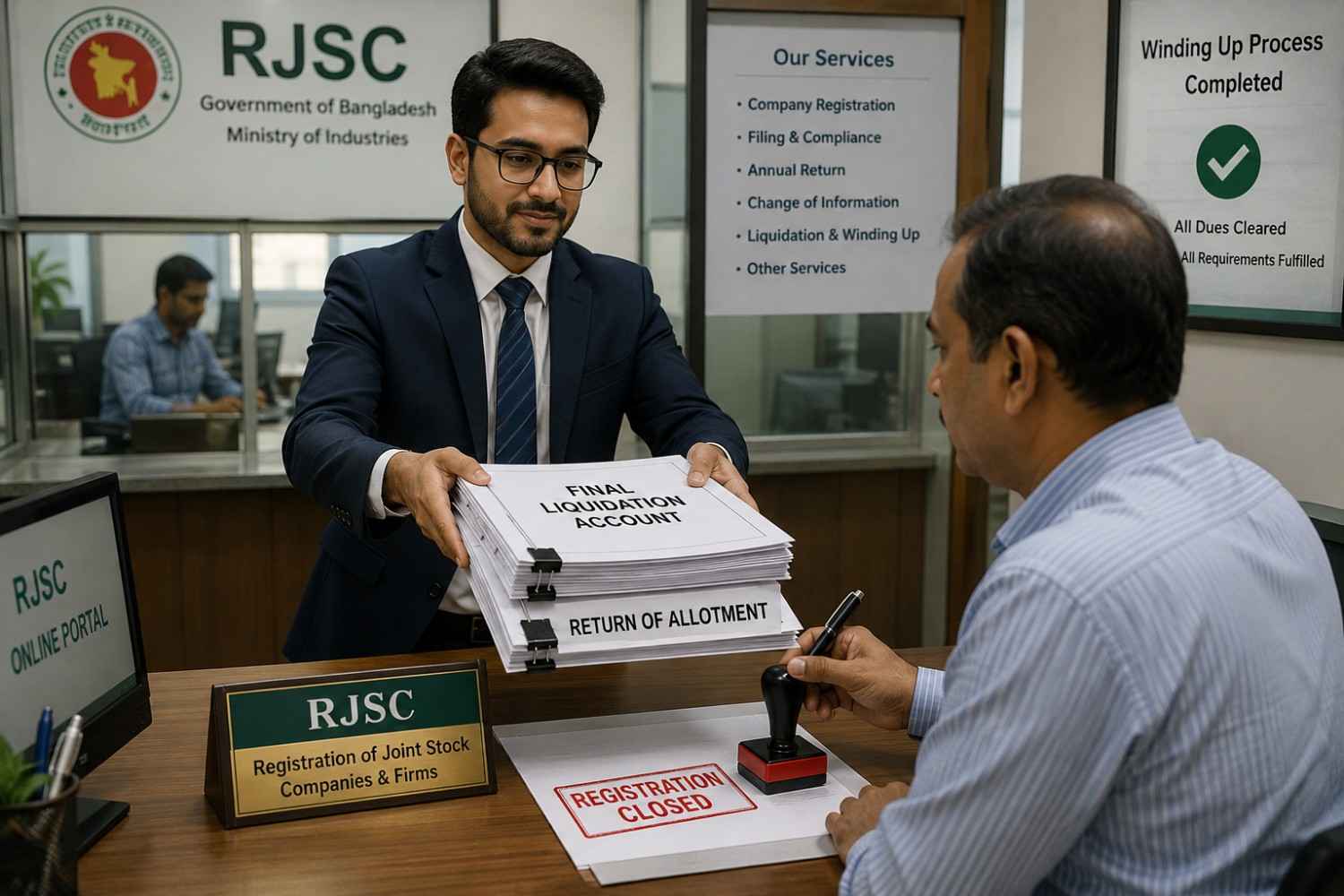
You’ll need to submit a certified copy of the board resolution, proving the decision to close. Also, current financial statements are required, showing the company’s financial health. These documents protect all stakeholders during the liquidation process.
Verification Procedures for Submitted Filings
When you submit Company winding up documents to RJSC, a thorough verification process begins. The agency checks your filings against the Companies Act requirements. They ensure your financial reports align with the board resolutions.
If any discrepancies are found, the RJSC may ask for clarifications. Maintaining clear communication with the regulatory office is key. By ensuring your documents are complete, you expedite the review process and move closer to approval.
| Document Type | Purpose of Submission | Regulatory Requirement |
|---|---|---|
| Board Resolution | Formalizes the intent to dissolve | Mandatory |
| Financial Statements | Details assets and liabilities | Mandatory |
| Shareholder Register | Confirms ownership structure | Mandatory |
| Liquidator Consent | Validates the appointed official | Mandatory |
Publishing Required Notices Where Applicable
Transparency is crucial when you start closing your business in Bangladesh. Publishing required notices is a legal duty to safeguard your creditors and stakeholders. It ensures you operate with full accountability where applicable under the law.
Legal Requirements for Public Announcements
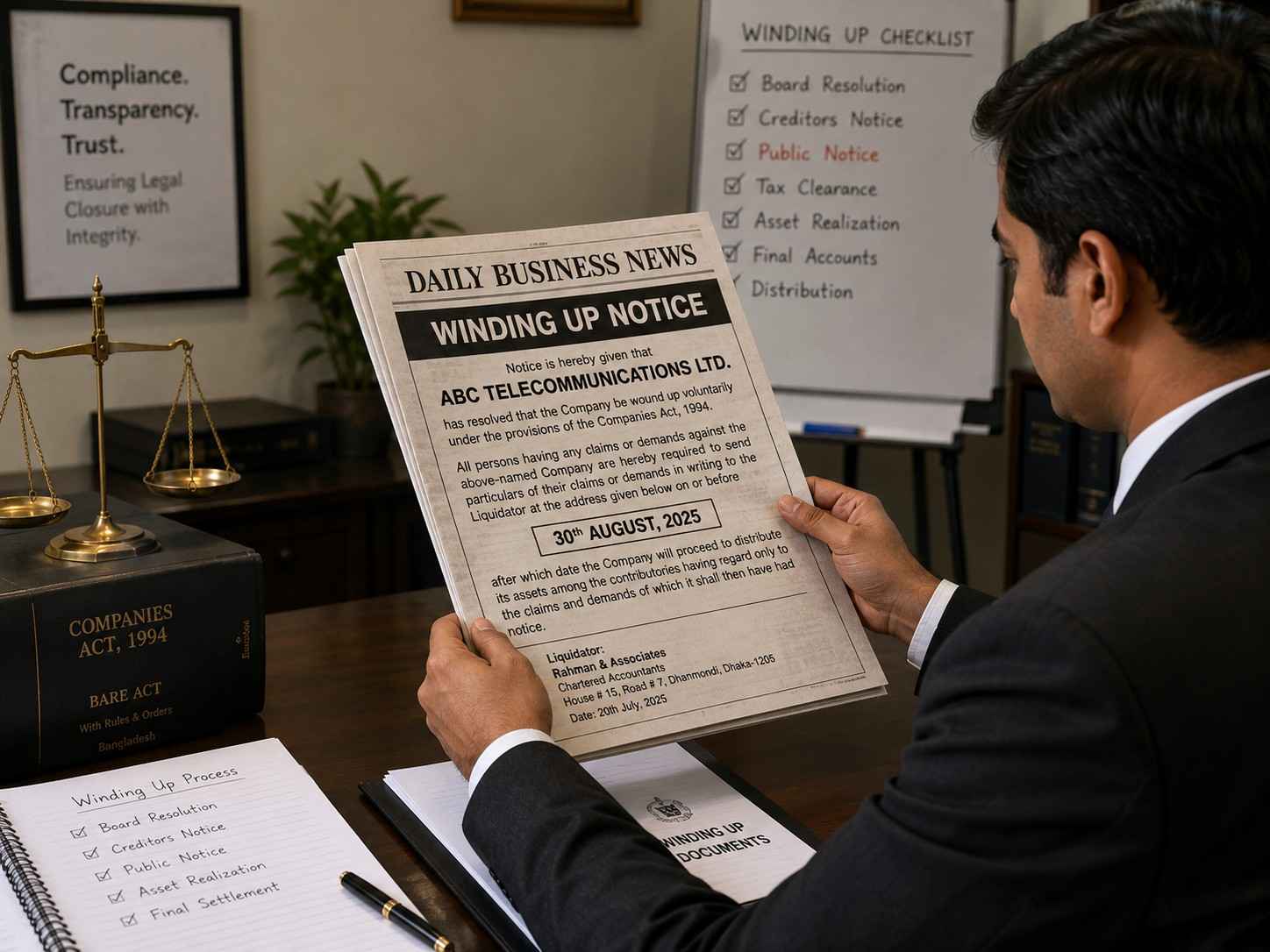
The law requires you to give public notice of your business’s end. Proper winding up notice publication formally declares your company’s liquidation phase. You must publish these notices in national newspapers to reach the widest audience.
Ignoring these publication rules can cause serious legal issues. By following the set timeline, you show your commitment to legal compliance. This step helps reduce risks from future claims by unknown creditors.
Notifying Creditors and Stakeholders Through Official Channels
Creating a formal Company winding up notice in Bangladesh demands accuracy and clarity. Your notice must clearly state your intent to dissolve the business and give creditors a deadline to file claims. This openness is key to preserving your professional reputation during your company’s final stages.
When publishing winding up notice, use official channels to ensure all relevant parties receive the information. Direct communication with known stakeholders is also advisable. This approach ensures you meet your obligation to inform all involved in your business.
Identifying and Verifying Company Assets and Liabilities
Identifying and verifying company assets and liabilities is crucial in your winding-up journey. This step ensures fair treatment for all stakeholders, including creditors and shareholders, under Bangladeshi law. Transparency is key for a successful dissolution.
Conducting a Comprehensive Asset Audit
Start by delving deep into your company’s balance sheet. A comprehensive asset audit identifies tangible items like office equipment and real estate, as well as intangible assets such as intellectual property or brand equity.
Determining the current market value of these assets is critical. Accurate valuation prevents disputes and ensures a smooth company assets and liabilities settlement. For complex or specialized assets, consider hiring professional values.
Categorizing Outstanding Debts and Financial Obligations
After mapping your assets, categorize your financial obligations. Group these debts by legal priority, such as secured creditors, unsecured creditors, and employee-related liabilities.
Proper categorization helps create a clear repayment plan. This preparation is crucial for the final closure of your business operations. The table below outlines how to organize these financial elements effectively.
| Category | Description | Priority Level |
|---|---|---|
| Secured Debts | Loans backed by collateral | High |
| Employee Claims | Unpaid wages and benefits | High |
| Trade Payables | Outstanding supplier invoices | Medium |
| Unsecured Loans | General business borrowings | Low |
Settling Outstanding Debts and Creditor Claims
Deciding to wind up your company means focusing on, settlement of outstanding debts and creditor claims first. This step requires a detailed plan to adhere to the
Companies Act, 1994. Managing settlement of company debts in Bangladesh well is crucial. It shields directors from personal risks and facilitates a smooth transition to dissolution.
Prioritizing Creditor Payments Under Bangladeshi Law
The law dictates a strict order for distributing assets to creditors. You must prioritize secured creditors before unsecured ones. Ignoring this order can result in legal issues and prolong the winding-up process.
The following table outlines the standard priority for payments during the liquidation process:
| Priority Level | Category of Creditor | Payment Status |
|---|---|---|
| 1 | Liquidation Expenses | Highest Priority |
| 2 | Secured Creditors | Primary Debt |
| 3 | Preferential Creditors | Statutory Obligations |
| 4 | Unsecured Creditors | Remaining Assets |
Managing Disputes During the Settlement Phase
Effective creditors’ meeting regulations are essential for verifying and addressing claims. At these meetings, you must scrutinize each claim’s validity before making payments. Transparency is key to avoid disputes with stakeholders.
In case of a dispute over settlement of creditor claims, seek legal advice promptly. Keeping detailed records of all transactions helps avoid legal complications. This approach keeps the liquidation process on track and reduces the risk of costly delays.
Closing Bank Accounts and Business Operations
Finalizing your business in Bangladesh requires deactivating financial and operational structures. When you start the Company closure in Bangladesh, ensure all active elements are dismantled. Knowing how to close a company in Bangladesh is crucial to avoid legal or financial issues.
Procedures for Deactivating Corporate Bank Accounts
The company bank account closure in Bangladesh marks the end of financial activities. You must work closely with your bank to settle all transactions before freezing the account. Unpaid balances can cause future complications.
For a smooth closure, follow these steps:
- Submit a formal board resolution for account closure.
- Clear all pending checks and automated payments.
- Get a “No Objection Certificate” or final account statement from your bank.
- Surrender unused checkbooks, debit cards, and credit facilities to the branch manager.
Ceasing Commercial Activities and Terminating Contracts
Addressing the operational side of your business is crucial for the RJSC company closure process. You must formally end all commercial agreements, including leases and supplier contracts. Transparency is key when informing partners about your decision.
Settle employee agreements according to local laws. Pay all final wages, bonuses, and severance packages to avoid legal issues. Terminating contracts protects your company from future claims and ensures compliance with regulations.
Completing Tax, VAT, and Other Regulatory Clearances
Completing Tax, VAT, and Other Regulatory Clearances is a critical milestone in the legal winding-up process. You must ensure that all government obligations are settled to receive the necessary No Objection Certificate from the relevant authorities. This step is a mandatory prerequisite for the final dissolution of your company with the Registrar of Joint Stock Companies and Firms (RJSC).
Obtaining Tax Clearance Certificates from the NBR
To initiate the formal closure, you must secure a tax clearance for company winding up from the National Board of Revenue (NBR). This process involves a thorough audit of your corporate tax filings to ensure no outstanding liabilities remain. Compliance is non-negotiable, as the NBR will verify your records before issuing the clearance certificate.
You should prepare the following documentation for the NBR:
- Copies of audited financial statements for the last three years.
- Proof of payment for all assessed corporate income taxes.
- A formal application letter requesting the tax clearance certificate.
- Details regarding the appointed liquidator and the board resolution for dissolution.
Finalizing VAT and Trade License Cancellations
Beyond income tax, you must prioritize your vat clearance for company winding up to avoid future penalties. This involves reconciling your VAT returns and ensuring that all input and output tax credits are correctly accounted for. Once the VAT department confirms your status, you will receive a clearance letter that serves as proof of your good standing.
Simultaneously, you must address the cancellation of your local trade license. This permit is typically issued by the City Corporation or the local municipality where your business operates. Failure to cancel this license can lead to unnecessary annual renewal fees and legal complications.
| Regulatory Body | Clearance Type | Key Requirement |
|---|---|---|
| NBR | Income Tax | No Objection Certificate |
| VAT Office | VAT Clearance | Reconciled Returns |
| City Corporation | Trade License | Formal Cancellation |
Securing a comprehensive regulatory clearance for company closure protects you from future litigation. By systematically clearing these hurdles, you ensure that your business exit is legally sound and fully recognized by the authorities in Bangladesh.
Preparing Final Financial Statements
As your company’s life cycle comes to an end, preparing final financial statements is a legal must. This step marks the end of your business’s financial journey. By meticulously Preparing the Required Legal and Financial Documents, you safeguard your directors and ensure a clear closure.
Auditing Accounts for the Final Liquidation Period
The liquidation phase demands a detailed audit to confirm all assets and liabilities are correctly recorded. You must match every bank statement, outstanding invoice, and tax obligation to ensure a clear audit trail. This meticulous process is crucial for the final financial statements for company winding up, avoiding any discrepancies that could hinder regulatory approval.
It’s advisable to hire a professional auditor at this stage for their objectivity. They will categorize all income and expenses from the winding-up period according to Bangladeshi accounting standards. This thorough verification ensures your financial status is accurately reflected.
Reporting to Shareholders and Regulatory Bodies
After the audit, you must share these results with your shareholders and the relevant authorities. Transparency is key, as stakeholders need to grasp how the company’s remaining value was calculated. A detailed report shows you’ve met your fiduciary duties during dissolution.
The table below details the essential components for your final reporting package, ensuring compliance with local regulations.
| Document Type | Primary Purpose | Target Audience |
|---|---|---|
| Final Balance Sheet | Shows net asset position | Shareholders & RJSC |
| Liquidation Account | Details all receipts and payments | Creditors & Regulators |
| Auditor’s Report | Confirms financial accuracy | Regulatory Bodies |
| Distribution Schedule | Outlines asset allocation | Shareholders |
Distributing Remaining Assets Among Shareholders
After all financial obligations are settled, you enter the final stage of the corporate lifecycle. Distributing remaining assets among shareholders marks the end of your business’s economic life in Bangladesh.
Calculating Pro-Rata Distributions
After clearing all debts and liabilities, the liquidator must calculate the net surplus for distribution. This is done on a pro-rata basis. It ensures each investor gets their share based on their equity stake.
Reviewing the share register is crucial to identify each participant’s share count. By dividing the total surplus by the number of issued shares, the value per share is determined. This transparent calculation avoids disputes and ensures fairness in the final payout.
Ensuring Compliance with Articles of Association
The distribution process is more than just math; it’s a legally regulated procedure. Your actions must align with your company’s Articles of Association. These documents govern your entity.
These articles outline specific rights for different share classes, like preference and ordinary shares. Failure to follow these rules can result in legal issues or claims from unhappy shareholders. Always check that the proposed distribution respects the rights established at incorporation.
Filing Final Liquidation Documents
The winding-up process in Bangladesh concludes with the file your final liquidation documents step. This marks the end of your company’s journey. It ensures your business has completed the dissolution process correctly. By doing so, you safeguard your professional reputation and meet all legal obligations.
Reporting the Completion of Liquidation to RJSC
After settling all debts and distributing assets, the liquidator must compile a detailed final account. This document outlines the entire liquidation process, including all financial transactions. Reporting the completion of liquidation to the RJSC is crucial to confirm your compliance with the Companies Act.
Ensure the report is signed and verified by the appointed liquidator. When submitting required documents of company winding up RJSC, verify that all financial dealings are documented. Any errors could cause delays in the approval process.
Finalizing the Winding-Up Report
Finalizing the winding-up report is the last step in closing your entity. This report proves you’ve met your statutory duties. It gives the RJSC the data needed to remove your company from the register.
The process of filing the winding-up application at RJSC may seem daunting. However, this final step clarifies your company’s history. Keep all final liquidation documents for your records. Once the RJSC approves these filings, your company will be removed from the register, ending its legal life.
Obtaining Final Approval for Dissolution
Reaching the end of your corporate journey in Bangladesh is a significant achievement. It means your company has fulfilled all legal requirements and is set to be removed from official records. By finishing the company dissolution process in Bangladesh, you avoid future legal and tax obligations.
Reviewing the Final Order from the Registrar
After the Registrar of Joint Stock Companies and Firms (RJSC) confirms your compliance, they issue a formal order. This document is the official proof of your company’s removal from the RJSC register. It’s crucial to check this order for accuracy in all details about your company’s closure.
The final approval for company dissolution is the pinnacle of your winding-up efforts. When you receive it, your business’s legal existence ends. This step is key to confirm your RJSC company dissolution in Bangladesh with all government bodies.
Addressing Potential Objections or Queries
During the RJSC company dissolution process, the Registrar might ask questions or spot small errors in your submissions. It’s vital to answer these quickly to prevent delays. Keeping in touch with the RJSC ensures a smooth removal of company from rjsc register.
If there’s an objection, address it with the required information or additional documents right away. Showing professionalism at this stage helps your Company dissolution in Bangladesh go smoothly. Once all issues are cleared, the final order will be issued, marking full closure.
| Stage of Dissolution | Primary Action | Expected Outcome |
|---|---|---|
| Final Review | Verify RJSC Order | Legal Confirmation |
| Query Resolution | Submit Clarifications | Compliance Approval |
| Official Removal | Update Register | Entity Termination |
Common Issues During the Winding-Up Process in Bangladesh
Closing a company in Bangladesh is rarely a straightforward process due to various regulatory challenges. When you commit to Winding Up a Company in Bangladesh, you must prepare for a journey that requires patience and meticulous attention to detail. Many business owners underestimate the administrative burden involved in finalizing their corporate affairs.
Navigating Bureaucratic Delays and Documentation Errors
Administrative hurdles often serve as the primary cause for extended timelines. You might find that minor errors in your statutory filings lead to significant setbacks with the Registrar of Joint Stock Companies and Firms (RJSC). Accuracy is paramount when submitting your final reports to avoid unnecessary rejections.
These documentation errors frequently increase the total company winding up time in Bangladesh. To mitigate these risks, ensure that every board resolution and financial statement aligns perfectly with your registered records. Consistent follow-ups with regulatory offices can help you stay ahead of potential bottlenecks.
Handling Complexities in Foreign and Joint Venture Company Winding Up in Bangladesh
The process becomes significantly more intricate for international entities. A Foreign company winding up in Bangladesh must navigate additional layers of compliance, including repatriation of capital and coordination with the Bangladesh Investment Development Authority (BIDA).

Similarly, a Joint venture company winding up in Bangladesh requires consensus among all stakeholders. Disagreements regarding asset distribution or debt settlement can stall the entire liquidation process. Whether you are managing foreign company liquidation in Bangladesh or joint venture company liquidation in Bangladesh, you must ensure that all cross-border financial obligations are settled according to local law.
Engaging with legal experts who understand these specific nuances is highly recommended. By anticipating these common obstacles, you can protect your interests and ensure a smoother transition as you exit the market.
The Importance of Professional Assistance in Company Winding Up
Closing a business demands precision to sidestep long-term legal risks. The significance of professional help in winding up a company is evident in Bangladesh’s complex regulatory environment.
Seeking a seasoned company winding up lawyer in Bangladesh is crucial for managing your filings. Their expertise ensures compliance with the Registrar of Joint Stock Companies and Firms regulations. This proactive approach safeguards your personal assets from future legal claims.
Working with a proficient company winding up consultant in Bangladesh offers clarity during challenging times. These specialists facilitate the process of appointing a liquidator to manage your assets. You’ll have confidence knowing your Company Winding Up in Bangladesh adheres to all legal requirements.
Investing in professional assistance for company winding up is a strategic move for your business’s legacy. Contact legal experts to discuss your specific liquidation needs. Proper planning today can prevent costly mistakes for your organization tomorrow.
FAQ
What is the primary law governing Company Winding up in Bangladesh?
The Companies Act, 1994, primarily governs company winding up in Bangladesh. Whether it’s a private or public limited company, following the Registrar of Joint Stock Companies and Firms (RJSC) regulations is crucial. This ensures a legal dissolution process.
What is the difference between a voluntary winding up process and compulsory liquidation?
A voluntary winding up is initiated by shareholders or creditors without court intervention, for solvent businesses. Compulsory liquidation, however, is ordered by the High Court Division for insolvent companies. Both require a liquidator to manage debt settlement.
What are the required documents for Company Winding up at the RJSC?
To start, you need specific documents like a Declaration of Solvency and audited financial statements. These must be submitted to the RJSC, along with a special resolution and notice of liquidator appointment.
How do I handle a Foreign Company Winding up in Bangladesh?
For foreign or joint ventures winding up in Bangladesh, notify the Bangladesh Investment Development Authority (BIDA) alongside the RJSC. This ensures all local liabilities are settled before deregistration.
Why is a liquidator appointment mandatory for company dissolution steps?
Appointing a liquidator is crucial as they take over the board’s powers. They verify assets and liabilities, settle claims, and file final documents accurately.
Is winding up notice publication required by law?
Yes, publishing a winding up notice in the Official Gazette and two daily newspapers is mandatory. It informs the public and creditors, allowing them to claim during debt settlement.
How do I obtain tax clearance for company winding up?
Apply to the National Board of Revenue (NBR) for a “No Objection Certificate.” This proves all corporate taxes are paid. You also need VAT clearance and to cancel trade licenses for final dissolution.
What happens during the RJSC company closure process regarding bank accounts?
Your liquidator will close the company bank account. Remaining funds are distributed to shareholders after settling claims and costs. Ensure all account closures and operations are documented.
How long is the typical company winding up time in Bangladesh?
The time varies based on asset complexity and regulatory clearances. Voluntary winding up usually takes 6 to 12 months, assuming no disputes or complications.
Why should I hire a company winding up lawyer in Bangladesh?
Hiring a lawyer is recommended due to the complexity of the process. A specialized lawyer ensures compliance with the Companies Act, 1994, avoiding penalties and ensuring smooth dissolution.
-
Foreign Company Registration in Bangladesh: Easy Guide 2026
Expanding your business into new markets offers exciting growth potential. Foreign Company Registration in Bangladesh is a straightforward process once you understand the local legal landscape. This guide provides a clear roadmap to help you navigate the legal requirements for setting up your operations effectively. We simplify the complex process of Foreign Company Incorporation Bangladesh…
-
Company Registration in Bangladesh: Easy Complete Guide
Embarking on a new venture is thrilling, yet it demands a strong base. A successful business setup in Bangladesh starts with picking the right legal form and completing the registration accurately. Quick Facts: Company Registration in Bangladesh Whether it’s a private limited company or a foreign-owned entity, the right documents are key to lasting success.…
-
Joint Venture Company Registration in Bangladesh: Complete Guide
Entering the South Asian market presents a significant opportunity for global investors. A strategic partnership allows you to merge resources and expertise. It also enables you to share operational risks effectively. Understanding Joint Venture Company Registration in Bangladesh is crucial for a smooth market entry. This guide simplifies the complex legal landscape and helps you…
-
Partnership Firm Registration in Bangladesh: Easy Steps (2026)
Starting a business with others is a wise choice for many entrepreneurs. It brings together shared resources and expertise, accelerating your venture’s growth. However, it’s crucial to handle the legal aspects correctly from the outset. Completing your partnership firm registration in Bangladesh grants your venture official status. This builds trust with clients and stakeholders. Grasping…
-
Company Share Transfer in Bangladesh: Easy RJSC Guide (2026)
Understanding the legal intricacies of corporate ownership changes is crucial. Whether it’s for restructuring or succession, knowing the mandatory steps is essential. This knowledge ensures your actions are in line with local laws. Quick Facts: Company Share Transfer in Bangladesh Every step must comply with the Companies Act and the Registrar of Joint Stock Companies…
-
RJSC Annual Return Filing in Bangladesh | Schedule X Submission in Bangladesh Guide
Running a business demands strict adherence to local corporate laws. If you manage a company, prioritizing RJSC Annual Return Filing in Bangladesh is crucial to maintain your legal status. This ensures your entity remains transparent and trustworthy to stakeholders. Schedule X submission in Bangladesh is a vital part of your yearly obligations. Keeping your director…
-
Branch Office Registration in Bangladesh: Easy Legal Guide
Bangladesh is one of South Asia’s fastest-growing economies — with strong GDP growth and a population exceeding 160 million, it offers substantial opportunity for foreign enterprises. Establishing a local office gives your company closer control over operations and faster access to customers and partners. This guide simplifies Branch Office Registration in Bangladesh: whether you’re evaluating…
-
Liaison Office Registration in Bangladesh | Representative Office Registration in Bangladesh
Expanding your business into new territories requires a clear strategy and a solid legal foundation. Bangladesh offers a wealth of untapped potential for international firms aiming to grow their global footprint. Establishing a local presence allows you to conduct vital market research and build lasting professional relationships. Navigating the regulatory landscape can feel daunting, but…
-
One Person Company Registration in Bangladesh: Easy Guide
One Person Company Registration in Bangladesh gives solo entrepreneurs a solid legal foundation to safeguard their assets. This modern business model allows an individual to enjoy corporate perks while retaining full operational control, making it ideal for entrepreneurs aiming to grow without the hurdles of traditional partnerships. Registering your startup with the Registrar of Joint…
-
Society Registration in Bangladesh | Complete RJSC Registration Guide
If your group works in charity, education, culture, or social welfare, registering as a society gives legal standing and public trust. This guide explains the practical steps, required documents, and fees so founders and organizers can complete the process confidently. Follow the clear steps for society registration in Bangladesh to secure name clearance, prepare your…
-
Foundation Registration in Bangladesh: Easy Guide (2026)
Setting up a non-profit in Bangladesh requires clear planning and a practical understanding of local rules. You’ll face specific administrative steps to ensure your organization operates legally and transparently. Understanding these requirements is the first step to creating lasting social impact. This guide lays out a clear, step-by-step path for Foundation Registration in Bangladesh, covering…